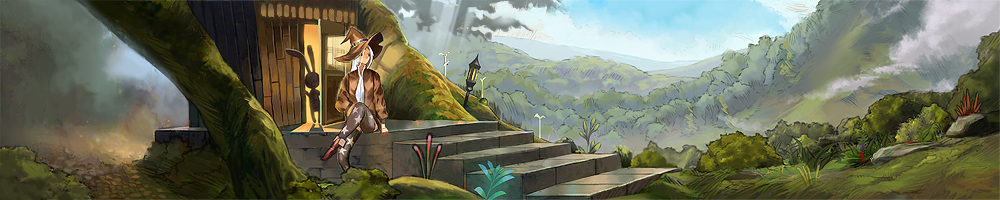
Natsu no Arashi – 11


I’m really glad that I ended up picking this show back up, because boy, was this episode awesome! For this episode, I feared a bit for Kanako and Yayoi’s lack of airtime, but this episode worked out really well. This episode was full of nice and clever touches. When I watched Tsukuyomi Moonphase about half a year ago, I really was tired Shinbo’s style, and the subsequent Shaft-series of a tale of Melodies and Maria Holic only made this worse for me. But I really have to say, that with Natsu no Arashi, I’m back to being a Shinbo-fan. Of course, I still believe that the third season of Sayonara Zetsubou-Sensei is going to suck unless proven otherwise, but I’m also pretty much looking forward to Bakemonogatari.

Anyway, in this episode we really got the chance to get to know some of the characters better. Since Hajime never got to meet the original Arashi, he of course had to use the chance to check up on her. It’s also a nice touch to see before whatever horrible happened to the foursome, they really were trying to live their normal lives as much as possible: Arashi and Kaaja were still trying to cheer up the mood by singing together, and Kanako was simply in the middle of a fight with Yayoi at the time Hajime and her Yayoi’s ghost version popped up.

It really was cute to see that Kanako, who was built up as such an evil-looking character in the past two episodes, was suddenly portrayed as a shy young school girl who regretted having fought with her best friend. I loved how she got all embarrassed when Hajime called out her name at the performance, in order to get her to come in.

What I also loved about this episode is that the creators put some real thought in what the ghost Kanako must have been doing in the meantime. It’s just too easy to make her stand in one place without having her do anything, but even though we never actually saw her through most of this episode, by the time we saw her again we knew exactly that she had been frantically searching for a way to get Yayoi back, and eventually just jumped on Hideo to get a contract with him. Hideo’s reaction to this was of course priceless.

This episode also nicely used a paradox in order to explain why Arashi chose Hajime of all people: because she saw Hajime when she was still alive, he must have seemed like the perfect guy to become friends with when she returned as a ghost. Speaking of paradoxes: why were there pictures of Hajime hanging in the old mansion of Yayoi?

Okay, so now there are two episodes left, and I really wonder what the creators have planned for that ending. In any case, we can expect to see the event that brought everyone back as ghosts. The past few episodes have shown that this story is planned out really well, but endings and finales are always something different, and even the best shows can trip over these unfinished endings. I’m curious to see whether this show can pull it off.
Rating: *** (Awesome)
Clever, subtle and yet packs one hell of a punch as it closes off the Yayoi and Kanako arc.

Konnichiwa Anne – 11


Oh, how I love the World Masterpiece Theatre. They never have a clear distinction between good and evil; just people who live their lives. Johanna… you can’t call her on the good side, but neither can she be labelled as a villain. This episode again was much lighter compared to before the move to Marysville, but again it was a really heart-warming one.

The episode starts as Anne drops by on Eggman again, and she brings him the book by Robert Browing that she got a few episodes back. Apparently, a bit of time has passed since the previous episode, because Anne already knows how to read a few more words words, and Robert shows her where they are in the book. They talk a bit about the book, and what the feelings of the author Robert Browning could have been. Eggman then says how he likes winter, as it covers the things he doesn’t want to see with snow.

Anne then notices a bunch of paintings that Eggman made. They are all unfinished, but that was Eggman’s intentions: when something is finished, it’s done, and over, and he doesn’t like that. Anne then notices a picture of presumably Eggman’s daughter, and he quickly turns it away and changes the subject to his own name: Robert Johnson.

Obviously, Anne returns very late and she gets scolded by Johanna for being so. Because Anne ruined the brush, she has to clean the potatoes by hand,, which is rather nasty with the cold water. The next day Johanna takes Anne out to town so that she can watch the carriage while she goes shopping. While she waits, Anne notices a shop full of new brushes, though she quickly gives up on these hopes because they cost money.

Her attention then falls on a man and a woman who are bickering with each other. The woman turns out to be a new teacher and quite the feminist, while the man doesn’t want to believe that women can be studying. The woman meanwhile passionately tries to convince him how women can contribute to society, and she starts quoting her favourite author: Robert Browning. Obviously, Anne also joins in at that point, but she quickly gets taken away by an angry Johanna. The teacher however tries to call her back, though by calling her red-haired she gets a very angry look from Anne.

The teacher however says that her hair looks really good. And then she asks whether she heard that line at school, but Anne answers that Eggman told her it, and how he’s been teaching her all kinds of words. As Johanna is standing right next to her, she finally realizes why Anne has been staying so long with this Eggman. The teacher then realizes that Anne isn’t going to school, and offers her to join the class that she’s about to teach. Johanna however then quickly pulls her out of it, saying that Anne is needed to do the housework. Who is going to do all her chores if Anne’s going to school every day? Johanna then quickly takes Anne away. Especially since she ruined that brush, there is no way that Anne is going to school.

That evening though, school still is on Anne’s mind, and she imagines how wonderful it must be. Bert meanwhile quietly says that Johanna perhaps could let Anne go to school, but Johanna says that since they’re a poor family, but you can see that she’s not entirely sure about her decision. The next day Anne again heads off to Eggman, and she talks about how perhaps when she gets her aunt a new brush, she’ll get to study at school. Eggman then proposes that Anne should give Johanna a brush as a present, though Anne says that she needs money for that. Eggman however offers to let her work for the money needed to buy the brush.

the next couple of days Anne works hard until she receives enough money. She hasn’t told Johanna about it, though Johanna overhears her talking to Rokimba once (still unsure of how to spell that name…). When she has enough money, Eggman offers to drive her to the shop that sells brushes. So Anne goes to the shop and buys the brush, and she’s very proud of it since it’s the first thing she bought with money that she earned herself. The teacher from before then shows up, and Anne (obviously elated) tells her about how she earned her first bits of money. Eggman then shows an entirely different side of himself, and suddenly gets very reserved and leaves pretty quickly, enforcing the rumours about how he is a bit of a strange guy.

When Anne gets back, Johanna yells at her for being back so late, but Anne then shows her the brush. Johanna however says that she isn’t going to let Anne go to school… in the winter. In the winter, there is just too much that Anne needs to help out with, though when spring comes, Johanna offered to let Anne go to school. The episode closes off as a very happy Anne runs outside and starts uttering some random lines again.

This episode really shows the start of what’s going to become Anne’s quest for knowledge, and this episode also showed that even though women were starting to take up studying, there were still enough people who didn’t see the use in that and just laughed off the idea of a female teacher, though it’s interesting how at the Green Gables farm, there hardly was any mention of it, but that’s probably because that takes place among some richer families, rather than the poorer environments in which Anne grew up in her first ten years.

One thing I didn’t like that much in this episode was the lack of subtlety in which Eggman’s character is handled. He’s really doing wonders for Anne, but it really is a bit too obvious that he lost his daughter to some reason and is a social outcast. The teacher of Kaze no Shoujo Emily was much better.

Rating: * (Good)
Heart-warming episode about Anne’s wishes to go to school

Full Metal Alchemist – Brotherhood – 11


Well, so this episode shows the Rush Valley arc. It was mostly the same as in the original series, but there were some notable differences:
1) The comedy was better and funnier as usual
2) Winry stays in Rush Valley to learn more (Yay!)
3) A completely random birth scene.

I mean seriously, what was up with that birth scene? I’m not sure whether or not this was in the manga, but it felt like the creators were like “hmm, this boring, we need some more drama – How about a birth scene? Okay!” If it was in the manga, then this is one thing that the original series did better: if you’re going to show a birth scene, it’s indeed much more meaningful to show the birth of Hughes’ daughter, rather than the birth of the daughter of some urelated side-characters.

Anyway, this episode really showed that the creators have slowed down the pacing significantly. Most of this episode didn’t have that much to do with the plot, though thankfully it lacked the stupidity that made the fillers of the original series so obnoxious. This episode again had lots of comedy, and it was pretty much like the rest of the series: it usually is really funny and there were some hilarious moments, but Ed yells too much. His voice actor simply isn’t funny when he starts yelling. The scene I liked the most though was that scene from Paninya’s childhood. There was a strange kind of irony in the way how lightly the creators treated such a young child who lost her legs, being picked up by Dominic who would end up saving her life, and yet it felt somewhat natural.

The next episode should show the real introduction of Izumi, and I suspect that at that point the show is going to be different from the original series again, since I’m assuming that Wrath is going to be completely different from the original series.

Oh, and on a side-note: I’m glad that this show decided to recreate its own soundtrack, because it really sounds much better and less generic than the soundtrack of the original series (not that that was bad, of course, but it didn’t really stand out either).

Rating: * (Good)
Not the most eventful yet a very entertaining episode.

Cross Game – 11


Well, and so ends the first match of this series. Looking back, I do have to say that I like this series better when it’s just slice of life and building up, but that in no way means that this was a disappointing episode; the slice of life from this show is just simply that good. What makes the matches of a typical Adachi-series is that for nine out of ten matches, it doesn’t matter whether the team wins or loses: life goes on. Whereas for most shows, there usually is some sort of fate of the world that depends on the lead characters or so.

Kou lost in quite an amusing way. He finally managed to get a strike-out from Azuma, and it seems that that was pretty much his motivation to keep pitching so well. So, obviously he becomes way too relaxed after that out and completely screws up with the batter after Azuma. And the two of the teams were on equal scores at that point.

But this episode really was about the third graders, who prety much only had this chance left to play some good baseball, and since there is no way that those guys can become professionals, it mught be one of the last times that they get to play in a real baseball match. And I must say that they closed it off pretty nicely.

Rating: * (Good)
It doesn’t stand out, but a nice conclusion to the match nonetheless.

Phantom – 11


Ugh, recap.

So yeah, most of this episode was just clips from previous episodes. Thankfully this is one of my favourite shows, so I didn’t mind to rewatch all of the great stuff that happened so far, but still. There was some new material that played three months after the previous episode. Apparently, Reiji was hit, though not in his fatal areas and he managed to recover, and now he seems to have gone back to Inferno. Scythe meanwhile has fled the organization, but he doesn’t seem to have fully given up on destroying them. Oh, and McCunnen seems to have lost a younger brother a few years ago.

So yeah, that’s pretty much it. I’m very much looking forward to the next episode now, and how Drei is going to fit in everything.
Rating: (Enjoyable)
Yeah, recap.

Pandora Hearts – 11


Ah, finally it’s time for Raven to reveal how he ended up with the Nightray family. This episode mainly talks about his past, and again it was quite an enjoyable episode. But something is bothering me. Some of the comments on last week’s entry talked about how this chapter was supposed to be one of the best of the series, but I don’t really see why; there have been much more impressive episodes so far. This one felt more like a solid build-up. And besides, even if this was supposed to be the best part of the series, then what does that mean for the rest of the story?

Still, I was pretty surprised to learn that Vincent is Gilbert’s younger brother, that was pretty random. Another surprise is that he also seems to have made contact with a being called “Raven”, probably in an attempt to get Oz back. Which apparently failed since Oz found a way to get back on his own. It also turns out that Vincent isn’t like Break in that he doesn’t age. Instead, ten years ago he was just a child as well, which begs the question of who was with Alice when she was younger. My guess now would be Oscar.

This episode also marks the return of Oscar, which at least also answers the question of where he went, although I am still curious as to what happened to Oz’s father. It’s going to be interesting if the two of them ever got to meet each other again. I’m interested to see how this guy changed over the past ten years.
Rating: * (Good)
Not among this series’ highlights but a solid episode on Gilbert’s past nonetheless.

Basquash! – 11


Well, you can really see that the animation director has changed, because the animation really is abysmal. Seriously, this episode was full of horribly distorted faces and rushed drawings. I think there were only two or three shots where you could see that time was spent on making them look good. The animation was very shoddy (just take a look at Dan and his basketball: physics don’t work that way!). Only the CG didn’t suffer from his influence.

As for the change of directors, you can also notice that, but at least this guy isn’t as much of a disaster as the new animation director. This guy thankfully is competent at what he does: he knows how to build up and flesh out characters, and the characters act natural enough. But something is definitely missing: the chaos and the randomness that made the first bunch of episodes so enjoyable.

In the first couple of episodes, there really was so much going on at the same time: every character had his or her own agenda. This episode… just concentrated on the little princess and Dan walking around town and Sera visiting the grave of her mother. The rest of the characters only had one or two scenes in which they really didn’t do anything and were… sleeping through the major part of this episode I guess. Oh, we did have Iceman who paid a visit to his rival again, but that also pretty much was a pointless visit.

All in all though, it’s a bloody shame that the staff was fired in the middle of the production. Satelight already is understaffed this season with no less than three series they’re working on at the same time. Guin Saga already showed that they lack the man-power to animate everything correctly, and this really isn’t the best time for them to create a production goof-up. The worst thing is that they’ve had this before with Kiss Dum, and even though this doesn’t look to be as big of a disaster as Kiss Dum turned into, it does show that the producers haven’t really been learning from their mistakes of keeping all of the staff-related business going smoothly.

It’s going to be really difficult for this series to surpass itself now. It’s now all going to matter whether the creators can develop the characters right, and plan out the basketball matches correctly.
Rating: (Enjoyable)
Really bad animation, though an enjoyable build-up nonetheless.

Eden of the East – 10


Okay, so I was wrong in last week’s impression: this episode of Eden of the East was definitely an excellent one and a step above the previous episodes about Pantsu. This episode explained a lot, and I have to admit that these revelations were well worth it. Mr Outside was nowhere near the evil overlord I thought him to be, Mononobe didn’t turn out to have the motives of simply destroying the world. It turns out that this show really likes to use red herrings.

So as it turns out, Mr Outside was a rich businessman called Ato Saizo (har har har), who himself had a part in reconstructing Japan after the second World War. He then however started to wonder whether the society he helped to create was the right one, and so whimsically created Juiz and enslaved 12 people apparently against their will in his quest to improve Japan. Mononobe and another Selecao we meet in this episode simply want to escape this plan, and the only way to do so seems to be to win the game. Apparently it involves sending a whole bunch of missiles to Japan. The only one I didn’t like was Number 10. He really was an emo kid who hates the world and therefore decides to blow it up. I’m glad that he’s going to die soon.

Juiz turns out to be an AI, probably modelled after Ato Saizo’s secretary. Ato may be dead right now, but the real Juiz seems to be working behind the scenes, and she probably is the one who maintains the AI Juiz. In the meantime, it also turns out that number 12 is either the supporter, or another Selecao who doesn’t agree with Mononobe, and something tells me that he’s going to be the main villain of this series once the movie starts.

There’s one part I didn’t quite get though: what was up with the boat-load of NEETs that suddenly returned on the ship? Wasn’t one of those NEET shown as he managed to become active in the society again? Why is the rest of them still naked and captured? Didn’t they get the chance to pick up their lives or something?

Rating: ** (Excellent)
Finally some answers, and satisfying answers they are.

Ristorante Paradiso – 09


Yup, today it’s time for the Theo-episode. And like always, there’s another surprise in this episode: the reappearance of that mysterious main chef that the restaurant started out with. She indeed was the one who guided Theo through his rookie-years when he first came to work at the restaurant, though they didn’t get along all the time.

And yet it’s very interesting how the creators only show the moments at which they had the biggest fights with each other: we’re simply left to guess what happened in between, and how the two got along with each other on a daily basis. And how they gradually grew to like each other. ^^;

After just completing Bartender, I’ve come to see this series in quite a bit of a different light. Since the horeca-genre is really new when compared to all of the other genres, there still is lots of opportunity to be different within the genre, and so far it’s good to see that all of them decided to focus on something different. When compared to Bartender, you can really see that the creators of Ristorante Paradiso lack the knowledge about food: they did a bit of reading on correct Italian dishes, but it’s clear that they don’t have a deep understanding of how Italian food works. In the meantime, it has other points at which it can be praised: a really calm and relaxing atmosphere, very nice visuals and an excellent characterization.

This episode also indeed showed what last week’s next episode preview had been showing: it’s time for the chefs to create the new menu, and Nicoletta gets to help. Obviously, her dishes are all good, but not good enough to be on the menu, and especially Theo is harsh. But as always, that again was a bit of a misleading part, because it’s not like Theo hates her food at all. Instead, he just had a bit of trouble giving her some good comments, since he himself had to endure the same abuse when he began. Something’s also telling me that he found Nicoletta’s work better than what he managed to produce when he just started out.

Speaking of which, that next-episode-preview of this episode weirded me out a bit. I mean, Luciano getting hit on by some middle-aged lady? It’s obviously not as it looks (I know how sneaky this series can be with that), but still, what do the creators have in mind as a finale for this series?

Rating: * (Good)
Theo’s back-story was very nice as usual.

Bartender Review – 85/100


Anime, just like any other medium, does suffer from the fact that as time goes on, it gets harder and harder to be original. In the past decade, nearly all of the genres we know today were already invented, and during the past few years, it has become near-impossible to create any new genres it seems. If I’m not mistaken, the last time a new genre was created was with the horeca-series: short series in which the main characters run a restaurant/food-shop/bar/etc. After shows as Ristorante Paradiso, the genre is quietly picking up in recognition and popularity, but the anime who pioneered it, Bartender, is even more notable.

Likewise, today it’s very hard to be original anymore. Just try to think of something that absolutely has never been done before; only a select amount of series can truly do such a thing with confidence. Still, I really have to say that Bartender is THE most original anime series to have aired in the past five years. It’s really one of those series of which you can’t think that anything good can come out of it… and yet it’s great. From the outside, it’s simply a series in which characters drop by the bar of the lead character, drink a bit, talk about their problems and “see the light”. This series however doesn’t only make this work, it also throws in lots of unique stuff that really makes optimal use from the fact that this is a show about liquor.

So yeah, the generic formula for this series is that a customer comes into the bar called Eden Hall, hosted by the bartender who can serve the Glass of the Gods, and talks about his problems. In cases like this, it’s of course very tempting for a show to simply cheese up his story and shallowly deus ex machina all of the customer’s problems away simply after drinking a bit, yet somehow Bartender manages to avoid this pitfall. It doesn’t just view cocktails as just mixes of random drinks, but it looks at where these drinks came from: why were these drinks created? How did they get their names? Why do people drink them? Throughout each episode it provides all kinds of real-life anecdotes, both well-known and obscure, and relates these to the customer’s problems. By cleverly combining all of this, the customer comes to an understanding of his problems that actually doesn’t feel forced or obvious, and yet makes a lot of sense. And THAT’s the strength of Bartender: it intelligently looks at its customer’s problems and analyzes them; all in a way I have never seen done before.

You can really see that this is a series that’s written by someone who has a passion for liquor. I’m a liquor noob myself, but even I could tell that this series has an incredible amount of knowledge about all sorts of drinks, cocktails and also the detailed history behind them. It’s just like Osamu Tezuka, who as a Medicine graduate made optimal use of his knowledge when he wrote Black Jack, or take Shion no Ou, whose manga was written by a former professional shougi-player, who completely understood all of the principles of the game.

The third point at which Bartender shines with originality is the way it handles its narration, which again is something I have never seen done before in anime. Customers simply don’t disappear when their story is over, but they instead turn into narrators: they occasionally return to help out the main narrator to tell his story, and share their views of the new customers, while at the same time they never try to butt in with other people’s problems. Especially the final two episodes shine in this, and the entire series closes off with a really rounded final episode, in the way that Seraphim Call’s final episode was originally meant to end.

Amidst the originality though, there is one flaw that really sticks out like sore thumb. While I’m often not bothered by animation, the animation in Bartender really is abysmal at times. A lot of the shots look like they were drawn in a rushed way, and the only thing that seems to save this show’s aesthetics is the atmosphere of a bar that this show manages to create. The distorted faces really get in the way when we see a customer have a moment of self-discovery and during these moments, the cheese also tends to take over. This series screams maturity, but at the same time it also becomes hard to take it seriously with some of these hideously drawn faces. Thankfully though, the production-values do get saved by an excellent and relaxing soundtrack that still manages to pack a punch.

In any case, this is probably the end of my little review spree for now, since the next show I’m planning to watch is another one of those 52-episoded ones, but the series that I’ve reviewed during the past week all have something in common: excellent narrative and a true passion and understanding for the subjects they were dealing with. This is another reason why I still am such a big fan of anime, because the series that are made with passion really are the most enjoyable to watch, and Bartender, just like Hunter X Hunter’s first OVA, Victorian Romance Emma’s first season and even Futakoi Alternative really show this.

Storytelling: 9/10
Characters: 9/10
Production-Values: 7/10
Setting: 9/10