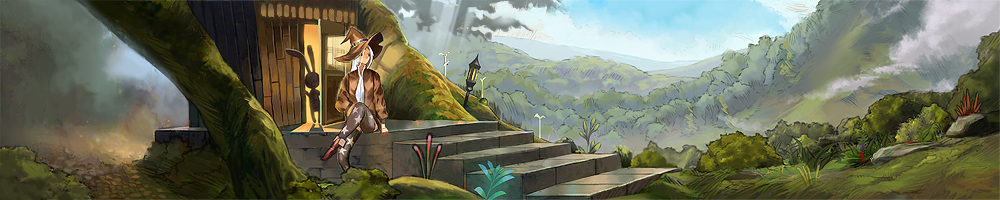


 Canaan is, without a doubt, the series with the biggest budget and best graphics of all the series that debuted the past Summer Season. With this, PA Works have really established themselves as a company with a number of amazing artists, with an amazing attention to detail. Canaan is a bit iffy on its plot, but it nevertheless turned out to be a great action series.
Especially the first episode is a masterpiece in terms of direction: there is so much happening at the same time, and there’s lots of stuff moving ont he screen at the same time. The rest of the series is toned down a bit in comparison, but nevertheless continuously puts forth well-animated and directed climaxes, in which the action ranges from subtle to over the top, but always packs a punch.
The problems in this series come from the fact that it can’t seem to decide whether it wants to be taken seriously or not. On one hand, it has this deep subplot of Canaan’s past, and her friendship with Maria. On the other hand, there is the American President and Liang “Psycho Bitch from Hell” Qi. These characters are so ridiculously over the top that it becomes really hard to take them seriously, especially among the rest of the series that does want to be taken seriously.
The back-story behind this series is also nothing special, and the plot has no real surprised. It’s something about a virus from some village being evil, and Canaan’s mortal enemy Alphard having something to do with it. This really is a series for the action.
Thankfully though, the rest of the cast manages to save this series from being yet another action series that fails to stand out at everything else. Canaan, Maria and Alphard are a great cast of main characters, and the side-characters also have their own issues that make them interesting to watch. The cast is colourful, and while nothing like the best of this season, they do manage to carry the weight of this series.
There have been a lot of action series during the past half year, and while Canaan isn’t the best, it did manage to stay interesting, and despite the few over the top characters it did manage to pick itself up again and delivered a very strong finale that only has one real problem: breaking the “people die when they’re killed”-rule. Some of the resurrections in this series are a tad hard to buy. But hey, it’s an action-series, so it shouldn’t be that surprising.
Canaan is, without a doubt, the series with the biggest budget and best graphics of all the series that debuted the past Summer Season. With this, PA Works have really established themselves as a company with a number of amazing artists, with an amazing attention to detail. Canaan is a bit iffy on its plot, but it nevertheless turned out to be a great action series.
Especially the first episode is a masterpiece in terms of direction: there is so much happening at the same time, and there’s lots of stuff moving ont he screen at the same time. The rest of the series is toned down a bit in comparison, but nevertheless continuously puts forth well-animated and directed climaxes, in which the action ranges from subtle to over the top, but always packs a punch.
The problems in this series come from the fact that it can’t seem to decide whether it wants to be taken seriously or not. On one hand, it has this deep subplot of Canaan’s past, and her friendship with Maria. On the other hand, there is the American President and Liang “Psycho Bitch from Hell” Qi. These characters are so ridiculously over the top that it becomes really hard to take them seriously, especially among the rest of the series that does want to be taken seriously.
The back-story behind this series is also nothing special, and the plot has no real surprised. It’s something about a virus from some village being evil, and Canaan’s mortal enemy Alphard having something to do with it. This really is a series for the action.
Thankfully though, the rest of the cast manages to save this series from being yet another action series that fails to stand out at everything else. Canaan, Maria and Alphard are a great cast of main characters, and the side-characters also have their own issues that make them interesting to watch. The cast is colourful, and while nothing like the best of this season, they do manage to carry the weight of this series.
There have been a lot of action series during the past half year, and while Canaan isn’t the best, it did manage to stay interesting, and despite the few over the top characters it did manage to pick itself up again and delivered a very strong finale that only has one real problem: breaking the “people die when they’re killed”-rule. Some of the resurrections in this series are a tad hard to buy. But hey, it’s an action-series, so it shouldn’t be that surprising.
| Storytelling: | 8/10 |
| Characters: | 8/10 |
| Production-Values: | 9/10 |
| Setting: | 7/10 |


 Watching Key the Metal Idol really makes me appreciate how awesome art from the 90s can be. Sure, the past decade has also put forth a fair amount of beautifully drawn anime, but there definitely is a charm to the cell animation that dates from the time when there was no CG yet. The designs in Key the Metal Idol in particular are beautiful, only made better by some terrific animation. But how does the rest hold up?
Well, very impressive. This is an OVA that shines in its direction, which knows exactly how to keep you guessing, interested and caring about the characters. It really draws you in with its strange plot, and the way it plays around with its characters (especially Key) gives them all a unique feeling.
Key the Metal Idol made really well use of its OVA format to try out new things, in an attempt to be unique. The premise of this series is that robot girl Key wants to be human, but needs to become friends with 30.000 people, but this is only the tip of the iceberg in this. As the series goes on, more and more very creative idea pop up and make sure that even fifteen years after it originally aired, this series still stands out as fresh and original.
With 13 episodes of 25 minutes, plus two episodes clocking in at a whopping 90 minutes both, this really is one of the longest OVAs out there (aside from Legend of Galactic Heroes, of course), and it really shows. While most OVAs are just way too short for their story, Key the Metal Idol does for once have plenty of time to show its entire setting, and it makes really well use of this and takes its time to let the story slowly unfold.
This gets taken especially far in episode 14, which is really nothing but ninety minutes of non-stop talking. It’s those kinds of things that are risky, and will either have you love or hate the series. I personally loved how it built up and very carefully explained exactly what was going on in this story, but you don’t want to watch it with a short attention span and it also violated the “show, don’t tell”-rule at times during the exposition.
The final episode in its turn suffers a bit from hasty and convenient explanations, that may leap logic a bit too much at times. On top of that, the budget also seems to have dropped in these episodes. It’s a bit sad for the finale of an otherwise excellent series, but it’s not like this final episode is bad either. It’s just… not as solid as the other episodes.
Nevertheless, Key the Metal Idol really has a lot to like. Because it was released over the course of four years the producers really had the time to make this series as solid as possible, and aside from the final episode this worked very well. The cast of characters is imaginative and very varied, yet every character feels unique, the storytelling draws you in and the dialogue is deep and meaningful as well. A great example of OVAs done right.
Watching Key the Metal Idol really makes me appreciate how awesome art from the 90s can be. Sure, the past decade has also put forth a fair amount of beautifully drawn anime, but there definitely is a charm to the cell animation that dates from the time when there was no CG yet. The designs in Key the Metal Idol in particular are beautiful, only made better by some terrific animation. But how does the rest hold up?
Well, very impressive. This is an OVA that shines in its direction, which knows exactly how to keep you guessing, interested and caring about the characters. It really draws you in with its strange plot, and the way it plays around with its characters (especially Key) gives them all a unique feeling.
Key the Metal Idol made really well use of its OVA format to try out new things, in an attempt to be unique. The premise of this series is that robot girl Key wants to be human, but needs to become friends with 30.000 people, but this is only the tip of the iceberg in this. As the series goes on, more and more very creative idea pop up and make sure that even fifteen years after it originally aired, this series still stands out as fresh and original.
With 13 episodes of 25 minutes, plus two episodes clocking in at a whopping 90 minutes both, this really is one of the longest OVAs out there (aside from Legend of Galactic Heroes, of course), and it really shows. While most OVAs are just way too short for their story, Key the Metal Idol does for once have plenty of time to show its entire setting, and it makes really well use of this and takes its time to let the story slowly unfold.
This gets taken especially far in episode 14, which is really nothing but ninety minutes of non-stop talking. It’s those kinds of things that are risky, and will either have you love or hate the series. I personally loved how it built up and very carefully explained exactly what was going on in this story, but you don’t want to watch it with a short attention span and it also violated the “show, don’t tell”-rule at times during the exposition.
The final episode in its turn suffers a bit from hasty and convenient explanations, that may leap logic a bit too much at times. On top of that, the budget also seems to have dropped in these episodes. It’s a bit sad for the finale of an otherwise excellent series, but it’s not like this final episode is bad either. It’s just… not as solid as the other episodes.
Nevertheless, Key the Metal Idol really has a lot to like. Because it was released over the course of four years the producers really had the time to make this series as solid as possible, and aside from the final episode this worked very well. The cast of characters is imaginative and very varied, yet every character feels unique, the storytelling draws you in and the dialogue is deep and meaningful as well. A great example of OVAs done right.


 The past spring season was a good one for fantasy-series. Among the best ones of this genre was Pandora Hearts. It takes the air of modern-day fairy-tales, and gives them a dark and twisted… twist, resulting into quite a unique series that focuses on themes as the past and forgiveness.
What sets this show apart is its distinct and dark style of storytelling. It has a heavy emphasis on twisted dialogues that are well delivered by the voice actors, and once it gets going, it just keeps getting more and more intriguing. This series has the very interesting characteristic that whenever you think that the creators couldn’t possibly pull any more plot twists, they do. This series is delightfully unpredictable, and just about every plot twist makes the setting more intriguing.
And what an intriguing setting it is! While at first it might seem like nothing special, but soon this series evolves into a multi-layered mystery-series that only gets more and more complex as the revelations come. Combine that with a deep and varied cast of characters and you’ve got a recipe for success.
As for this series’ flaws, it’s that the lead character Oz isn’t always able to carry the series. Whenever Oz starts angsting he tends to drag the entire series along with him, and his times of inner retrospective are deep, but also tend to drag along a bit too much. And overall, the cast could have been more fleshed out. At the end of the series, I only started to feel like I was beginning to get to know the characters. Add the fact that it’s not yet sure whether a second season will come to animate the remaining manga chapters, and you’ve got an incomplete series that desperately needs more screentime.
Nevertheless, Pandora Hearts really is a gem of a series, and when it delivers it really does over and over. Xebec created a really unique graphical style that combines the art style from the 90s and the past decade, and a lot of shots really are visual feasts in terms of aesthetics. The music by Yuki Kajiura may not be her best work, but still shines in every single way. Now if only that second season would get announced.
The past spring season was a good one for fantasy-series. Among the best ones of this genre was Pandora Hearts. It takes the air of modern-day fairy-tales, and gives them a dark and twisted… twist, resulting into quite a unique series that focuses on themes as the past and forgiveness.
What sets this show apart is its distinct and dark style of storytelling. It has a heavy emphasis on twisted dialogues that are well delivered by the voice actors, and once it gets going, it just keeps getting more and more intriguing. This series has the very interesting characteristic that whenever you think that the creators couldn’t possibly pull any more plot twists, they do. This series is delightfully unpredictable, and just about every plot twist makes the setting more intriguing.
And what an intriguing setting it is! While at first it might seem like nothing special, but soon this series evolves into a multi-layered mystery-series that only gets more and more complex as the revelations come. Combine that with a deep and varied cast of characters and you’ve got a recipe for success.
As for this series’ flaws, it’s that the lead character Oz isn’t always able to carry the series. Whenever Oz starts angsting he tends to drag the entire series along with him, and his times of inner retrospective are deep, but also tend to drag along a bit too much. And overall, the cast could have been more fleshed out. At the end of the series, I only started to feel like I was beginning to get to know the characters. Add the fact that it’s not yet sure whether a second season will come to animate the remaining manga chapters, and you’ve got an incomplete series that desperately needs more screentime.
Nevertheless, Pandora Hearts really is a gem of a series, and when it delivers it really does over and over. Xebec created a really unique graphical style that combines the art style from the 90s and the past decade, and a lot of shots really are visual feasts in terms of aesthetics. The music by Yuki Kajiura may not be her best work, but still shines in every single way. Now if only that second season would get announced.


 I have a question for the manga-readers: was this episode really anime-original? I mean, it was a standalone episode and all, but at the same time it gave out a lot of new information about a certain character, it actually showed the current Sabrie and it also developed Oz a bit and it was well paced with a very nice insert-song at the end.
But yeah, Oz’s father was a very nice way to close off this series. It very nicely ties in with the beginning of the series, and it really is a major bit of development for Oz, getting over the trauma that was caused by the neglect of his father. He did angst a bit this episode, but he had enough reasons to do so, after finding out that his father made a contract with a Chain, became a member of the Baskervilles and forced Oz into the Abyss! I’m not sure about the coincidence that allowed him to meet up
The question still remains whether that second season is going to come or not. This episode gave no hints whatsoever about the creators’ intentions. Or rather, the sponsors’ intentions to finance another sequel. Let’s really hope that that’s going to be the case, because there is a lot of potential left in the second half. It’s going to be a bloody shame for the story to be just cut in half like this.
Overall, Pandora Hearts ended up as a really enjoyable series, despite a few bumps along the way. It always knew a creative way to develop its story and every time I thought that it couldn’t pull any more plot twists, it did. the characters all have a strange charm to them, though I wouldn’t count them among my favourites of the past season.
Rating: ** (Excellent)]]>
I have a question for the manga-readers: was this episode really anime-original? I mean, it was a standalone episode and all, but at the same time it gave out a lot of new information about a certain character, it actually showed the current Sabrie and it also developed Oz a bit and it was well paced with a very nice insert-song at the end.
But yeah, Oz’s father was a very nice way to close off this series. It very nicely ties in with the beginning of the series, and it really is a major bit of development for Oz, getting over the trauma that was caused by the neglect of his father. He did angst a bit this episode, but he had enough reasons to do so, after finding out that his father made a contract with a Chain, became a member of the Baskervilles and forced Oz into the Abyss! I’m not sure about the coincidence that allowed him to meet up
The question still remains whether that second season is going to come or not. This episode gave no hints whatsoever about the creators’ intentions. Or rather, the sponsors’ intentions to finance another sequel. Let’s really hope that that’s going to be the case, because there is a lot of potential left in the second half. It’s going to be a bloody shame for the story to be just cut in half like this.
Overall, Pandora Hearts ended up as a really enjoyable series, despite a few bumps along the way. It always knew a creative way to develop its story and every time I thought that it couldn’t pull any more plot twists, it did. the characters all have a strange charm to them, though I wouldn’t count them among my favourites of the past season.
Rating: ** (Excellent)]]> 

 Series about girls’ baseball teams that challenge male baseball teams are nothing new. Princess Nine did this before. Still, Taishou Yakyuu Musume tries to bring in a bit of a twist with its setting: the 1920s. it’s a very nice setting for a feminist series to explore the struggles of a team of girls to be accepted in a male-dominated sport.
When you look at the baseball in this series however, it unfortunately ends up shallow. It isn’t about girls defeating boys. My problem with this series is that more than half of the members of this series’ baseball team start out as complete noobs, and yet they suddenly grow strong enough to be just as good as a team of guys who have been training for their entire lives. I mean, I don’t mind feminism at all (in fact, it’s much better than the alternative and turning females into simple damsels in distress), but that’s no reason to deus ex machina your characters into talented players.
When you look past the baseball however, you’ve got a pretty enjoyable series. This series is actually mostly slice of life, with only a few episodes dedicated to baseball matches, and the slice of life is definitely the most enjoyable part in this series. The characters all have their charms and are enjoyable to watch, and the plot provides interesting situations that shape their characters.
But yeah, that’s nice and all but this remains a 12-episode series with more than fifteen major characters. there’s no way to flesh out all of them, and so a lot of characters remain underdeveloped even though they have quite a bit of potential. Still, at least the two lead characters have enough charms to save this series and while they have a few stereotypes here and there they’re fleshed out nicely, and are able to carry this series as lead characters.
Sure, this series isn’t anything special, but it’s the kind of series you watch on a rainy day. It’s very enjoyable, and even the baseball matches aren’t anything bad if you can swallow the unrealistic skills of the girls. It’s always good for a light watch, and this show really knew what it was.
Series about girls’ baseball teams that challenge male baseball teams are nothing new. Princess Nine did this before. Still, Taishou Yakyuu Musume tries to bring in a bit of a twist with its setting: the 1920s. it’s a very nice setting for a feminist series to explore the struggles of a team of girls to be accepted in a male-dominated sport.
When you look at the baseball in this series however, it unfortunately ends up shallow. It isn’t about girls defeating boys. My problem with this series is that more than half of the members of this series’ baseball team start out as complete noobs, and yet they suddenly grow strong enough to be just as good as a team of guys who have been training for their entire lives. I mean, I don’t mind feminism at all (in fact, it’s much better than the alternative and turning females into simple damsels in distress), but that’s no reason to deus ex machina your characters into talented players.
When you look past the baseball however, you’ve got a pretty enjoyable series. This series is actually mostly slice of life, with only a few episodes dedicated to baseball matches, and the slice of life is definitely the most enjoyable part in this series. The characters all have their charms and are enjoyable to watch, and the plot provides interesting situations that shape their characters.
But yeah, that’s nice and all but this remains a 12-episode series with more than fifteen major characters. there’s no way to flesh out all of them, and so a lot of characters remain underdeveloped even though they have quite a bit of potential. Still, at least the two lead characters have enough charms to save this series and while they have a few stereotypes here and there they’re fleshed out nicely, and are able to carry this series as lead characters.
Sure, this series isn’t anything special, but it’s the kind of series you watch on a rainy day. It’s very enjoyable, and even the baseball matches aren’t anything bad if you can swallow the unrealistic skills of the girls. It’s always good for a light watch, and this show really knew what it was.


 Okay, time for me to review my favourite anime of the past Spring and Summer Season: Phantom, or Requiem from the Phantom. It’s based on a visual novel by Nitroplus, and while it starts off as a Noir clone at first, it develops into something much more. It shows a story about a couple of assassins inside the modern American mafia.
It sets itself apart with an amazing cast of characters. Especially Ein and Zwei develop into a bunch of strong and sympathetic characters, but also most of the side-characters are memorable. They’re all incredibly well acted; the voice actors really managed to capture their characters, and there’s always a lot of subtlety in their actions and development.
This is all accompanied by a terrific execution. Dialogues between people often move slow, but a lot of things are said in-between the lines. The creators have a great sense of build-up, and know exactly how to deliver the plot twists with as much of an impact as possible. Despite the subtlety, the action-scenes also pack a punch. This show knows that gunfights between excellent marksmen can last very short, and they made excellent use of this in their build-up.
Since this is a Bee-Train series, the music is without a doubt excellent, but at the same time you can see that they’re trying out a few new things here and there. The use of music throughout the series is downright excellent, but what amazed me the most is the incredible size and versatility of the different background tunes. Hikaru Nanase, who also did the soundtrack of Noein and Zone of the Enders, created an incredibly versatile set of tracks for this series. The drawings are also continuously crisp, without hardly any distorted frames, and the animation itself is also pretty decent.
A bit of a lesser point of this series is that there are sometimes strange leaps in logic. One character may have escaped death a bit too narrowly, and this series also forces you to assume that with the right training, a bunch of teenagers can become much better at handling guns than any adult out there.
Nevertheless though, I personally loved this series. It’s a show that’s constantly evolving, even within its distinct three arcs. The major theme of this series, in which the best course of action doesn’t always get taken due to a sad combination of circumstances, is excellently explored by the cast. The characters in this series are deep and complex, and often you find them saying things while in reality they actually believe in something completely different. With an ending that you’ll either love or hate, this is a great recommendation if you like dark yet slow-paced series and don’t mind teenagers in your anime.
Okay, time for me to review my favourite anime of the past Spring and Summer Season: Phantom, or Requiem from the Phantom. It’s based on a visual novel by Nitroplus, and while it starts off as a Noir clone at first, it develops into something much more. It shows a story about a couple of assassins inside the modern American mafia.
It sets itself apart with an amazing cast of characters. Especially Ein and Zwei develop into a bunch of strong and sympathetic characters, but also most of the side-characters are memorable. They’re all incredibly well acted; the voice actors really managed to capture their characters, and there’s always a lot of subtlety in their actions and development.
This is all accompanied by a terrific execution. Dialogues between people often move slow, but a lot of things are said in-between the lines. The creators have a great sense of build-up, and know exactly how to deliver the plot twists with as much of an impact as possible. Despite the subtlety, the action-scenes also pack a punch. This show knows that gunfights between excellent marksmen can last very short, and they made excellent use of this in their build-up.
Since this is a Bee-Train series, the music is without a doubt excellent, but at the same time you can see that they’re trying out a few new things here and there. The use of music throughout the series is downright excellent, but what amazed me the most is the incredible size and versatility of the different background tunes. Hikaru Nanase, who also did the soundtrack of Noein and Zone of the Enders, created an incredibly versatile set of tracks for this series. The drawings are also continuously crisp, without hardly any distorted frames, and the animation itself is also pretty decent.
A bit of a lesser point of this series is that there are sometimes strange leaps in logic. One character may have escaped death a bit too narrowly, and this series also forces you to assume that with the right training, a bunch of teenagers can become much better at handling guns than any adult out there.
Nevertheless though, I personally loved this series. It’s a show that’s constantly evolving, even within its distinct three arcs. The major theme of this series, in which the best course of action doesn’t always get taken due to a sad combination of circumstances, is excellently explored by the cast. The characters in this series are deep and complex, and often you find them saying things while in reality they actually believe in something completely different. With an ending that you’ll either love or hate, this is a great recommendation if you like dark yet slow-paced series and don’t mind teenagers in your anime.


 Whoa, wtf…
Throughout this episode, I had no idea what the people in the shoutbox were talking about. I mean, it was an awesome episode that did just about everything it should have done: exciting gunfight, after which Scythe dies and Reiji and Helen live on, trying to search for Helen’s origins. After a bit of searching, they find that she was taken from Mongolia when she was little. It was a very fitting ending for my favourite series for the past half year.
Then the episode actually ended, and I understood. That really was daring from the creators: just when everything seems solved, they pull such a surprise ending that nobody saw coming, and they don’t even dare to explain what happened. Out of nowhere, a gunshot sounds, and both Reiji and Helen die. No extremely long death speeches, no overdramatic buildup. It’s just there, and less than a minute later they’re dead. it’s entirely left up to our imagination what happened.
And yet, somehow it made me like this ending even more. My theory of what happened is that McGuire is behind it. Something like “don’t mess with the mafia”, and he probably ordered assassins to track Ein and Zwei down. He previously left this to Scythe Master and Drei, but since the two of them failed he tried to do this a bit more subtle. Whatever assassins came, they figured that the most likely place that they would be able to find them was Ein’s place of birth. They knew this through Scythe, and they probably picked up a hint somewhere that Reiji and Helen were searching for it. After that, they only had to wait and snipe them when they arrived.
It just shows that there’s nothing like a happy end in the mafia. I really liked this ending because it didn’t try to overglorify the death of the two protagonists. It was a really subtle finale, and that’s something I can really appreciate. I admire Bee-Trains’s guts for trying to pull such an ending.
Overall, this has been such a wonderful series. It’s definitely in my Top 3 of Bee-Train series, along with Popolocrois and .Hack//Sign. It had such an amazing sense of subtlety, and yet at others it packed such a punch. With a fantastic soundtrack and a terrific sense of characterization (well, for me at least), I really consider this series to be the best of the past half year, and I’m looking forward to Bee-Train’s next series in 2010, whatever it may be about.
Rating: ** (Excellent)
EDIT: crap, I misunderstood this ending. Only Reiji died, Helen remained alive. Still, that doesn’t change my opinion, this episode rocked. Unless you want happy endings, of course. 😉
EDOT2: Major SPOILER for El Cazador!
After this, I still want to add a bit to the huge rage of people that seem to be unhappy over this episode. Watch El Cazador. that one has a happy ending in which the two progaonists live together happily ever after. Ironically, I remember how that ending also wasn’t well received. Ironic, isn’t it?]]>
Whoa, wtf…
Throughout this episode, I had no idea what the people in the shoutbox were talking about. I mean, it was an awesome episode that did just about everything it should have done: exciting gunfight, after which Scythe dies and Reiji and Helen live on, trying to search for Helen’s origins. After a bit of searching, they find that she was taken from Mongolia when she was little. It was a very fitting ending for my favourite series for the past half year.
Then the episode actually ended, and I understood. That really was daring from the creators: just when everything seems solved, they pull such a surprise ending that nobody saw coming, and they don’t even dare to explain what happened. Out of nowhere, a gunshot sounds, and both Reiji and Helen die. No extremely long death speeches, no overdramatic buildup. It’s just there, and less than a minute later they’re dead. it’s entirely left up to our imagination what happened.
And yet, somehow it made me like this ending even more. My theory of what happened is that McGuire is behind it. Something like “don’t mess with the mafia”, and he probably ordered assassins to track Ein and Zwei down. He previously left this to Scythe Master and Drei, but since the two of them failed he tried to do this a bit more subtle. Whatever assassins came, they figured that the most likely place that they would be able to find them was Ein’s place of birth. They knew this through Scythe, and they probably picked up a hint somewhere that Reiji and Helen were searching for it. After that, they only had to wait and snipe them when they arrived.
It just shows that there’s nothing like a happy end in the mafia. I really liked this ending because it didn’t try to overglorify the death of the two protagonists. It was a really subtle finale, and that’s something I can really appreciate. I admire Bee-Trains’s guts for trying to pull such an ending.
Overall, this has been such a wonderful series. It’s definitely in my Top 3 of Bee-Train series, along with Popolocrois and .Hack//Sign. It had such an amazing sense of subtlety, and yet at others it packed such a punch. With a fantastic soundtrack and a terrific sense of characterization (well, for me at least), I really consider this series to be the best of the past half year, and I’m looking forward to Bee-Train’s next series in 2010, whatever it may be about.
Rating: ** (Excellent)
EDIT: crap, I misunderstood this ending. Only Reiji died, Helen remained alive. Still, that doesn’t change my opinion, this episode rocked. Unless you want happy endings, of course. 😉
EDOT2: Major SPOILER for El Cazador!
After this, I still want to add a bit to the huge rage of people that seem to be unhappy over this episode. Watch El Cazador. that one has a happy ending in which the two progaonists live together happily ever after. Ironically, I remember how that ending also wasn’t well received. Ironic, isn’t it?]]> 

 I personally love those series in which you can never be sure what to expect, which is exactly the case in Umineko. Even after being spoiled that Beatrice was going to die I still loved how this episode played out. Seriously, can this series get even more intriguing?
In this episode, we learn that Beatrice indeed existed once on the island, but died in an accident when she was with Rosa. That part is most likely true, and the killer used that story as a basis for his murders. At that point, Beatrice also says that there are only 18 people on the island. However, she says this inside a flashback. What does that mean? That there were eighteen people on the island when Beatrice died? Or does that go for the current time-line?
Also, this episode ends up killing off all of the servants of the Ushinomiya-family for the first wave of victims. On top of that, it’s also revealed that the Kumasawa is the one who taught Beatrice her magic. That does make me wonder though: how did she let herself get killed off so easily in the first and second arc? Was it because she was with others? Did that prevent her from showing her powers?
Anyway, my guess is that there is a number of people that the killer wants dead, and he ends up killing a few more in order to cause confusion and throw people off. We know from the previous arc that Battller, Jessica, George, Natsuhi, Maria, Genji, Rosa and Kinzou are not among these people, which leaves 10 possible sources of the killer’s hatred. This arc should also promise to be interesting, because we finally get to see a bit more from Battler’s parents and Krauss, who all died in the first round in the previous arcs.
But yeah, the part in which Beatrice goes on a killing spree for the first six sacrifices is probably another illusion created by Beatrice, in order to throw Battler off. But how long can she keep pulling these things before Battler suspects anything?
Rating: ** (Excellent)]]>
I personally love those series in which you can never be sure what to expect, which is exactly the case in Umineko. Even after being spoiled that Beatrice was going to die I still loved how this episode played out. Seriously, can this series get even more intriguing?
In this episode, we learn that Beatrice indeed existed once on the island, but died in an accident when she was with Rosa. That part is most likely true, and the killer used that story as a basis for his murders. At that point, Beatrice also says that there are only 18 people on the island. However, she says this inside a flashback. What does that mean? That there were eighteen people on the island when Beatrice died? Or does that go for the current time-line?
Also, this episode ends up killing off all of the servants of the Ushinomiya-family for the first wave of victims. On top of that, it’s also revealed that the Kumasawa is the one who taught Beatrice her magic. That does make me wonder though: how did she let herself get killed off so easily in the first and second arc? Was it because she was with others? Did that prevent her from showing her powers?
Anyway, my guess is that there is a number of people that the killer wants dead, and he ends up killing a few more in order to cause confusion and throw people off. We know from the previous arc that Battller, Jessica, George, Natsuhi, Maria, Genji, Rosa and Kinzou are not among these people, which leaves 10 possible sources of the killer’s hatred. This arc should also promise to be interesting, because we finally get to see a bit more from Battler’s parents and Krauss, who all died in the first round in the previous arcs.
But yeah, the part in which Beatrice goes on a killing spree for the first six sacrifices is probably another illusion created by Beatrice, in order to throw Battler off. But how long can she keep pulling these things before Battler suspects anything?
Rating: ** (Excellent)]]> 

 Holy crap! The eye-candy! To think that Satelight had saved its best budget for last, that really took me by surprise. I didn’t expect to say this of Basquash of all shows, but this really was the prettiest episode I’ve seen during the entire Summer Season.
And I must say, that the creators actually did it. This episode was actually a pretty good prelude to the final episode that’s going to air next week. It was completely different from what I expected (I expected some Shin Mazinger-esque action-fest, but instead the pacing was much, much slower), but this finale has actually managed to get me excited about this series again.
It really was a risk to switch directors for this series, but in the end it actually worked. I really didn’t know why the first director was laid off when it was first announced, but after a while it did become apparent that he lost his touch around episode 8 or 9. While the characters did get developed, it was all just shallow and predictable, and nowhere near as fun and original as the first part of the series. It was a weird decision to bring in the director of Kiss Dum of all people, and he really took a risk by focusing a lot on build-up, rather than action-scenes, but I guess that it did pay off in the end. Sure, it was stupid at times, but then again I’ve stopped taking this series seriously by now.
As for the next episode… who knows how it’s going to end? It’s most likely going to feature the world getting saved and all, but whether it’s going to be action-packed or slow like the past episodes, I have no idea. At least, it really looks like it managed to avoid the Macross Frontier ending: the bad guys this time don’t feel as shallow that they can suddenly turn into good guys with a Deus ex Machina, and Dan’s love interests are instead all fine right now, and not playing the parts of damsels in distress, but actually turned out to be worthwhile sidekicks. With that, I’m happy enough. In a way, Basquash turned out to be the complete opposite of Macross Frontier for me: great start, great end, dull middle.
Rating: ** (Excellent)]]>
Holy crap! The eye-candy! To think that Satelight had saved its best budget for last, that really took me by surprise. I didn’t expect to say this of Basquash of all shows, but this really was the prettiest episode I’ve seen during the entire Summer Season.
And I must say, that the creators actually did it. This episode was actually a pretty good prelude to the final episode that’s going to air next week. It was completely different from what I expected (I expected some Shin Mazinger-esque action-fest, but instead the pacing was much, much slower), but this finale has actually managed to get me excited about this series again.
It really was a risk to switch directors for this series, but in the end it actually worked. I really didn’t know why the first director was laid off when it was first announced, but after a while it did become apparent that he lost his touch around episode 8 or 9. While the characters did get developed, it was all just shallow and predictable, and nowhere near as fun and original as the first part of the series. It was a weird decision to bring in the director of Kiss Dum of all people, and he really took a risk by focusing a lot on build-up, rather than action-scenes, but I guess that it did pay off in the end. Sure, it was stupid at times, but then again I’ve stopped taking this series seriously by now.
As for the next episode… who knows how it’s going to end? It’s most likely going to feature the world getting saved and all, but whether it’s going to be action-packed or slow like the past episodes, I have no idea. At least, it really looks like it managed to avoid the Macross Frontier ending: the bad guys this time don’t feel as shallow that they can suddenly turn into good guys with a Deus ex Machina, and Dan’s love interests are instead all fine right now, and not playing the parts of damsels in distress, but actually turned out to be worthwhile sidekicks. With that, I’m happy enough. In a way, Basquash turned out to be the complete opposite of Macross Frontier for me: great start, great end, dull middle.
Rating: ** (Excellent)]]> 

 The first season of Chi’s Sweet Home showed us exactly how awesome cats can be, so I was looking forward to its second season. Unfortunately, it fell victim to the number one pitfall of all comedies out there: it lost its inspiration! Such a shame!
The first season had a set of absolutely hilarious and classic episodes, while the other episodes always managed to put a smile on your face through the antics of Chi and later Blackie. The second season does have its share of funny episodes, but those are nowhere near as memorable as they were in Season One, and the lesser episodes really become more and more tedious to sit through as the series goes on.
In my opinion, the creators shot themselves a bit in the foot when they created the premise for this series. The first season had a red thread running though it: the fact that Chi lived in an apartment in which pets weren’t allowed returned often, provided some nice tension and made sure the series evolved as it went along. In Chi’s New Address, Chi’s owners move to a place in which pets are allowed. As a result, the rest of its episodes can simply be divided into two categories: episodes in which Chi runs around and meets someone, or episodes in which Chi breaks something. Sometimes the creators try to bring in a bit of extra dimension by putting both in one episode, but there is a general lack of direction throughout the entire series, and as it goes on the episodes get more and more repetitive. Especially the episodes in which Chi randomly causes trouble have been done to death by the end of the series.
But that’s not the only thing that deteriorated. For some reason, the animators also lost their inspiration. In a lot of episodes, Chi only has two emotions: neutral and happy. There’s nothing in between! While the characters were so charming in the first season, they were turned into a bunch of bloody stereotypes during the second season. Chi is way too often just happy for no reason whatsoever. Happiness should be spontaneous, not granted or forced.
At the end of the series, the creators do close off with a serious arc again, and to the show’s credit: it is enjoyable. They had a nice idea for it, and it was executed decently, although it really tended to be melodramatic during the heavy bits. Especially that final episode is horribly forced and cheesy. This series is supposed to be seinen, not kodomo!
Overall, it’s one thing for a comedy to stop being funny, but Chi’s New Address screws up in a lot of other areas as well. Thankfully, this summer seasons premiered a show called Kuruneko, and it’s everything a good cat-show should be. So yeah, if you like cats, go watch Chi’s Sweet Home’s first season and Kuruneko, but stay away from this one.
The first season of Chi’s Sweet Home showed us exactly how awesome cats can be, so I was looking forward to its second season. Unfortunately, it fell victim to the number one pitfall of all comedies out there: it lost its inspiration! Such a shame!
The first season had a set of absolutely hilarious and classic episodes, while the other episodes always managed to put a smile on your face through the antics of Chi and later Blackie. The second season does have its share of funny episodes, but those are nowhere near as memorable as they were in Season One, and the lesser episodes really become more and more tedious to sit through as the series goes on.
In my opinion, the creators shot themselves a bit in the foot when they created the premise for this series. The first season had a red thread running though it: the fact that Chi lived in an apartment in which pets weren’t allowed returned often, provided some nice tension and made sure the series evolved as it went along. In Chi’s New Address, Chi’s owners move to a place in which pets are allowed. As a result, the rest of its episodes can simply be divided into two categories: episodes in which Chi runs around and meets someone, or episodes in which Chi breaks something. Sometimes the creators try to bring in a bit of extra dimension by putting both in one episode, but there is a general lack of direction throughout the entire series, and as it goes on the episodes get more and more repetitive. Especially the episodes in which Chi randomly causes trouble have been done to death by the end of the series.
But that’s not the only thing that deteriorated. For some reason, the animators also lost their inspiration. In a lot of episodes, Chi only has two emotions: neutral and happy. There’s nothing in between! While the characters were so charming in the first season, they were turned into a bunch of bloody stereotypes during the second season. Chi is way too often just happy for no reason whatsoever. Happiness should be spontaneous, not granted or forced.
At the end of the series, the creators do close off with a serious arc again, and to the show’s credit: it is enjoyable. They had a nice idea for it, and it was executed decently, although it really tended to be melodramatic during the heavy bits. Especially that final episode is horribly forced and cheesy. This series is supposed to be seinen, not kodomo!
Overall, it’s one thing for a comedy to stop being funny, but Chi’s New Address screws up in a lot of other areas as well. Thankfully, this summer seasons premiered a show called Kuruneko, and it’s everything a good cat-show should be. So yeah, if you like cats, go watch Chi’s Sweet Home’s first season and Kuruneko, but stay away from this one.