Kuchuu Buranko – 08


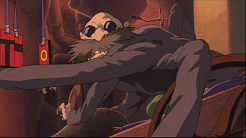
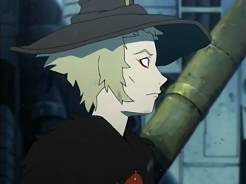
Remember that episode in which that kid stood amongst a crowd that was looking at some sort of fight going on? Yeah, this episode explains the reason behind it: a reporter with an out of control obsessive compulsive disorder was attacking a homeless guy for groping school girls. Makes sense. 😛

But yeah, this episode showed yet again that the psychology is just a vehicle to this show’s real purpose: entertainment. This really turned out to be a show that makes fun of obsessive compulsive disorders, but it does it in such a way that it also becomes a bit relatable. And really, this series works great as a comedy: that chase scene was really hilarious in its over-the-topness.

And yet, this episode actually had quite an interesting message as well, the fact that not every psychological ailment can be cured. Here we have a guy who can do his research, and thinks that for every ailment there’s a sure-fire cure. In the end though, he just ends up living with his ailment. I think that this was actually one of the more powerful endings that we’ve seen in this series yet.

I’m actually pretty curious to what this show has in store for its final episode. With the way that it keeps referencing previous episodes, there is a possibility for it to take this to a next level at the end.

At this point, I’m pretty sure of how I’d rank this year’s Noitamina-series:
4) Eden of the East
3) Kuchuu Buranko
2) Genji Monogatari Sennenki
1) Tokyo Magnitude 8.0

It’s overall been a great year for this timeslot, full of daring concepts and creative ideas. Sure, some series didn’t go as well as planned (Eden of the East… I still believe that it was poorly balanced), but you can see that a lot of time an effort has been put in every single one of them.
Rating: ** (Excellent)

White Album – 23


Okay. What the heck?

This episode had a very good chance to be among the best of this series yet. It was chock full of character-development, changing relationships, extra character-backgrounds, characters coming to realizations. Touya spinning even more out of control, and yet everything fitted. To think that Menou was the president’s daughter! That fully explains her rebellious attitude and it also gives a whole direction to Mana’s loneliness: she doesn’t just suffer from being neglected by her mother, but she also has to endure the fact that her older sister gets much more attention, because she just happens to be able to sing well.

Also, Akira and Misaki have finally broken up, which also really had it coming. Even though Touya tried to stay away from them, it was clear that Misaki still had feelings for him. She tried dating Akira, but in the end her feelings remain. Touya then obviously continues to screw even her. Or at least this is implied very heavily.

But yeah, we get more and more evidence that everything that made Touya the way he is stems from his childhood, and his relationship with his father. My guess is that the reason his father kicked him out of the house was in a desperate attempt to make him create his own happiness. It’s clear now that his father was very bad at raising his son: he wanted to reach out to him when Touya was feeling down, yet instead he tried making little girls do it.

But then, yeah. The cliffhanger. KANON-SPOILERS in the next paragraphs.

Akira… was hit by a car. Bloody hell, it’s now certain that the creators are planning to drop a bomb during the finale. I have to praise this show for really making me not suspect anything: even in retrospect, it came completely out of the blue: no shallow build-up or foreshadowing. But yeah: car accidents are always tricky to do. The question is: did the creators have a clear purpose for it. Are they going to use this to get the best out of the characters… or was this just a cheap death for extra melodrama.

I remember when Kanon pulled this, and I was reminded the most of that particular scene when Akira crashed down. In Kanon, it hardly served any purpose; it felt random and out of place, and just for the sake of a sad climax. This is pretty common in anime (or any other storytelling medium, I guess): We need extra drama! Let’s have a car run over someone!

These final episodes are really going to make or break this series. It’s been building up to this for so long, there had better be fireworks at that ending. What I want to see is total chaos that yet stays in canon with the rest of the series: I want melodrama that fits within the story without any cheap plot twists pulled solely for the purpose of extra drama. We’ve got Code Geass for that.
Rating: ** (Excellent)

Armed Librarians – The Book of Bantorra – 10


And here the next arc starts, and the creators yet again have found themselves a great concept. It’s here where any concept of “main character” gets completely lost. I guess that really the closest thing to a main character in this series has to be Hamyuts Meseta. Not because she has the most screentime, but rather that she’s somehow involved in every episode, even if it’s just watching from the sidelines. There’s still so much that we don’t know about her.

But yeah, even though Bones has its powerhouses of Full Metal Alchemist and Darker than Black, for me this remains the series with the best fights of all of the currently airing shows. Armed Librarians has this whole extra layer of strategy involved. It actually succeeds in something that only few series can boast: it has incredibly powerful characters, it has intricate strategies, and it has incredibly dangerous villains who can easily take out any moron who comes in their path. And yet, these incredible superpowers remain well defined, matched and logical.

Compare this to just about any other anime in which characters have huge superpowers: especially in the case of the villains, writers tend to write themselves into a wall with these types of characters: how the heck do you beat them without giving your main characters some godmode powers as well? It leads to huge power-level inconsistencies. And Armed Librarians is one of the few shows who can actually avoid it, thanks to Hamyuts Meseta, but also because its characters use their own powers wisely. In this series, you get a very good view of everyone’s strengths and weaknesses, and what their powers allow them to do. Even Hamyuts Meseta, the most powerful character in the series isn’t simply god-moded either: you can see that it’s possible for her to be defeated, if it wasn’t for Colio.
Rating: ** (Excellent)

Darker than Black – Ryuusei no Gemini – 09


I had my doubts when I heard that the goofballs of the first season would return in this episode. Especially combined with Hei, shaving his beard: the creators would have to very skillfully write these final episodes, even more than the previous eight episodes. The danger of this show turning into one that goes into its on direction, yet gives up in the end and simply decides to go with the tried and true formula of the first season would be disastrous.

Instead, what this series now has to do is instead of completely going back to the style of the first season, bring both seasons together: converge the two of them into one. And bloody hell, this episode actually did it.

Of course, this perhaps wasn’t the best episode of the second season, but the two goofballs were a lot less annoying than what I remember them to be. They again had a clear purpose: to form a contrast with the contractors in this series, and they went further than the goofball in this series by actually pushing Suou towards meeting her mother; something that she for some reason didn’t look forward to. It’s a really good episode that contributed to how she’s struggling with her own identity as a contractor, while brilliantly having her avoid the usual angsty indecisive teenager route.

On top of building upon the themes of the second season, this episode was also chockful of references to the first season: Amber seems central to the plot, Hei has cut off his hair and finally has another reason to act like the nice guy he pretended to be in the first season. What’s more, some of the characters of the first season seem vital to the plot of the second season. You can see that the creators have put a lot of thought into it.

That scene in which Suou met her mother surprisingly lacked impact for me, though. I’m not sure what it was, but I was much more interested in just about everything around it. There are still a few huge questions behind it that need answering: why that woman from the CIA direct Suou to her mother? What is she trying to achieve? What has Suou’s mother been up to anyway?

Also, colds in Japan are weird. Instead of taking quite a few days to blow over, you simply faint, sleep and it usually completely disappears after a few hours. Either that or a lot of Japanese mistake colds for anemia, which is also much more common than where I live…
Rating: * (Good)

Umineko no Naku Koro ni – 23


Oh wow, now this is indeed more like it. Talk about an intriguing episodes after the rather boring past three episodes. This episode returned Umineko where it’s good at: mind-numbing mystery. How the heck are the creators going to write themselves out of this? It’s a bloody shame that we have to wait for more than a year to get to see those answers animated.

The biggest question mark of this episode was obviously George becoming the demon king. While I have no idea what that meant, he now also has his own magical powers (a shield, which is something which he somehow learned from his mother, who I guess knows martial arts…), with which he pwned Gaap in this episode.

We still follow Ange as well, and the mystery gets yet another extra dimension: all of the children of the people who died on Rokkenjima received a key to a lot of cash, presumably the Ushinomiya family fortune. If it were just Ange who received it it would have made sense, but why did the son of Nanjo, who is totally not related to this case nor the headship of the Ushinomiya family, receive access to this fortune as well? Also, what was that thing that Ange saw in that plastic bag?

What also surprises me is that meta-Battler doesn’t make an appearance whatsoever in this episode. In this way, it becomes a bit tricky to see what Beatrice is planning with this incredibly elaborate set-up. I mean, if her goal is indeed just to keep the endless loop, couldn’t she simply show the first arc over and over? Something tells me that she’s really wanting Battler to acknowledge magic, and that this isn’t because of the job she received from Lambdadelta.

This also makes me very curious to see what Kinzou has in store for Battler and Maria. Battler will probably have the option to kill off Kyrie, while Maria just lost her mother. who is the one who is listed on her trial? On top of that, the two of them have a far weaker resolve than Jessica and George. Meta-Battler excluded, Battler has so far struck me as someone with a strong opinion, but also stubborn and not the most competent. To come with a comparison: Jessica doesn’t just talk about protecting her loved ones, she also acts upon it. Battler just talks. Now that I mention it, has he ever actually done anything significant?
Rating: ** (Excellent)

Oh, and just a reminder: I don’t know exactly when chapter six, seven and eight will be released, but remember that I will unceremoniously delete any spoiling comments about them. I’m not repeating this message because the commends during the past few entries have gotten out of control, but rather for after this series finishes, in the case that some random visual novel player stumbles upon this page and finds it a good idea to let the anime-only viewers know about what’s going to happen in the end.

Kuchuu Buranko – 07


Apologies for the lateness of this post; the very slow subs really threw me off. In any case, this yet again was an episode that was more than worth it. I really like how this series continues to get more daring with every passing episode, it has a very nice effect of something spiralling out of control. This episode was hilarious, and while not the deepest one it still had a fun and interesting protagonist to work with: a yakuza who can’t stand pointy objects.

At this point, you can also see that the creators have loads of fun with the cross-references to past episodes. Bando returns, and heck: we even saw this episode’s protagonist in one of the previous episodes if I’m not mistaken. This explains that the ski glasses wasn’t just a random stylistic choice, but the guy actually had a reason for it: experimenting whether or not that would help him cure his fears.

This show is over the top, but in a good way. The fun in this series comes from the characters, and not necessarily the psychology: it merely fits a supporting purpose in this series. I only didn’t like that eventual part in which the rival yakuza guy turns out to also have an OCD. It’s just cheesy.

We also learn that most of Irabu’s appearances next to his patients are in fact in a flashback, and he doesn’t always accompany his clients like what was previously suggested. Only in the scenes in which he directly interacted with other people are the parts in which he went out of his office. At other times, he’s simply inside the client’s story, commenting on what happened.
Rating: ** (Excellent)

Kimi ni Todoke – 09


Seriously, it’s like nearly the entire episode had its head in the clouds this time. The amount of slow-motion shots, close-ups with lots of sparkles, glitters and brightly coloured flowery backgrounds is really hard to believe. I don’t want to know how much sugar the creators took before writing this episode…

In any case, this episode also reminded me how different Japanese cultural standard can be at times. A lot of attention in this episode was spent to Sawako and Kazehaya who kept calling each other by their last names. I’ve been watching anime for quite a while yet, but the difficulty these people have with even pronouncing first names surprises me at what a polite country Japan can be.

The rest of the episode, aside from this and the countless other scenes that feature Sawako and Kazehaya getting uncomfortable toward each other, focused on the upcoming sports event. It’s a staple of any high school series to feature some sort of traditional school event, so I guess that Kimi ni Todoke has gone for the sports festival. In my opinion, anime in general puts too much emphasis on these things. Seeing these seemingly obligatory events in just about every high school series also doesn’t really help. And it’s a shame, really: shows like GA show that there are plenty of other things that you can do on a high school.

Oh, and a surprise was seeing that Kurumi suddenly claiming Sawako as a friend of hers. I’m not exactly sure what to think of this at the moment. It would have been pretty weird for her to do such a thing without an ulterior motive, so let’s see what the next episodes can do in explaining why she chose Sawako of all people to become friends with.
Rating: * (Good)

2000-2009 – Decade Summary Part 1

It took me a while to figure out what I wanted to do with these “Decade Summaries”. I first thought of listing the most memorable moments for me during the past 10 years, and actually tried writing such a post, but eventually I got stuck with it: I just can’t to justice to those moments. In the end, I figured that I’m so often trying to pick out my Top 3 for each season, so why not show a compilation of my three favourite series for every season of the decade?

So yeah, this is obviously going to be a quick-fire post with a lot of one-liners. This post contains 40 Top 3s, so it’s mostly used to give readers a glimpse of the good shows that aired during the past decade (the ones I’ve watched, anyway). In the second half of this decade summary, I’ll go more into detail. You can expect it around the end of December.

Basically, every anime is only eligible during the season that it originally started airing. Spring is from March to May, Summer from June to August, Autumn from September to November, et cetera.

Winter 2000

#3: Mushrambo – Yeah, this season sucked. Dragged on for way too long in the end, but had its moment of creativity as a shounen series.
#2: Kazemakase Tsukikage Ran – Simple yet fun samurai comedy.
#1: Boogiepop Phantom – Unique mystery-series that really requires a user to think in order to actually understand it.

Spring 2000

#3: Love Hina – The first harem I ever watched, and pretty nicely done compared to the other shows of this genre.
#2: NieA Under 7 – Very charming slice of life series with awesome character-designs. I should have rated this one higher when I reviewed it.
#1: FLCL – Crazy, but well written and engaging little OVA.

Summer 2000

#3: Brigadoon – Marin to Melan – Sunrise Mecha with its own unique style. Very well developed characters.
#2: Jin Roh – The Wolf Brigade – Very intelligent movie (Mamoru Oshii was involved, so how could it not be?). Very well written with a great ending.
#1: Strange Dawn – Everything fantasy should be. Incredibly detailed storytelling with an incredibly strong cast of characters.

Autumn 2000

#3: Legendary Gambler Tetsuya – Very interesting look at Mah-jong and cheating. Never drags on.
#2: Sci-Fi Harry – Imaginative and deep mystery-series that may have bitten off a bit more than it could chew.
#1: Argento Soma – Seemingly average mecha at first, but becomes really good near the end with simple but well developed main characters and storylines.

Winter 2001

#3: Earth Girl Arjuna – Great graphics, nice characters, but way too damn preachy.
#2: Tales of Eternia – Interesting choice to go with a side-story instead of a full fledged epic rpg-storyline. Nothing special, but fun enough.
#1: Spirit of Wonder – Scientific Boys Club – Strange little OVA, but very imaginative slice of life.

Spring 2001

#3: Soultaker – Back when Shinbo’s style was still new and fresh. Very nicely written and layered mystery-series with plenty of nice action.
#2: Zone of the Enders – Dolores – Awesome mecha epic with a great emphasis on family values and probably one of the oldest protagonists I’ve ever seen in a TV-anime.
#1: Figure 17: Tsubasa & Hikaru – A truly excellent character-study that combines gentle slice of life with tense and intelligent battles.

Summer 2001
#3: Fruits Basket – Shoujo series done well. Great characters, but especially the dialogue stands out.
#2: Arete Hime – Very quiet but engaging medieval movie that really takes its time to show the lead character.
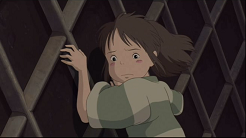
#1: Spirited Away – In my top 3 of favourite Miyazaki-movies. Lots of details and imagination in just about everything.

Autumn 2001

#3: X – Well executed character-study from Clamp.
#2: Kaze no Youjinbou – Wonderfully animated and detailed look at local Yakuza, combined with an engaging mystery-plot
#1: Millennium Actress – Satoshi Kon’s excellent homage to various movie genres. Absolutely lovable cast.

Winter 2002

#3: Full Metal Panic! – Successfully combines moe with a war drama.
#2: Voices of a Distant Star – A very impressive short by Makoto Shinkai. Awesome graphics and a sense of distance that only he can pull off.
#1: Hunter X Hunter OVA – Everything a shounen series should be. This story is imaginative, intelligent focused and very well built up.

Spring 2002
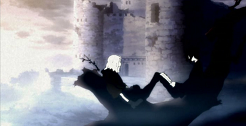
#3: Comedy – Don’t get fooled by the name: this 10-minute short is a beautifully animated short story about feudal Ireland.
#2: Full Moon wo Sagashite – Long build-up is long, but this idol mahou shoujo becomes truly heart-wrenching eventually.
#1: .Hack//Sign – A unique concept, focusing on character interactions inside MMORPGs. Awesome philosophical themes and characters, but not for those expecting action.

Summer 2002

#3: Sentou Yousei Yukikaze – Beautiful graphics. A bit confusing of an OVA, but the action and characters make up for it.
#2: Saishuu Heiki Kanojo – Perhaps not the saddest series out there, but the quiet scenes among the death and destruction are truly worth it.
#1: The Cat Returns – Fun, whimsical and charming story with great characterization for the various cats around.

Autumn 2002

#3: Overman King Gainer – Seemingly average mecha show at first, but it stands out due to its beyond awesome OP and incredibly creative ideas thrown into the setting and scenario.
#2: Hanada Shounen-Shi – The lead character is very, very hard to like. An annoying brat in every single way. And yet this series is really heart-warming.
#1: Haibane Renmei – I have hardly ever been so emotionally moved as with this series. A fantastic character-study and with incredibly well explored themes.

Winter 2003

#3: Wolf’s Rain – I’ve only seen three shows of this season. I didn’t quite like this one. The concept had potential, but the main plot and characters didn’t.
#2: Yokohama Kaidashi Kikou – Quiet Country Cafe – I’m still wondering why they didn’t make a TV-series out of this, but ah well. Relaxing slice of life OVA.
#1: Ashita no Nadja – This is how good shoujo adventures can be. Really fun characters, and a surprisingly deep and well developed plot during the second half.

Spring 2003

#3: Kino no Tabi – The Beautiful world – Thought-provoking travelling series with a very likable lead character of Kino.
#2: Oseam – One heck of a tear-jerker of a movie. Korean animation at its finest.
#1: Kaleido Star – An anime about circus performers, and it’s a really well developed one. It makes optimal use of its long length to really show a memorable development for the lead character.

Summer 2003
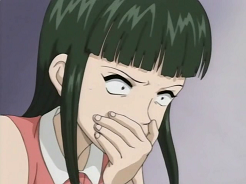
#3: Narutaru – Shows what kids are really going to do when you give them a bunch of violent monster. Very disturbing, to say the least.
#2: Rumiko Takahasi’s Rumic Theater – 13 stories written by Rumiko Takahashi, all about random, ordinary adults who run into extraordinary problems. Very down-to-earth and the creators make every story count.
#1: Tokyo Godfathers – Satoshi Kon at his best. This movie is crazy, fun, adorable and deep, so that even a few deus ex machinas won’t prevent it from truly shining.

Autumn 2003

#3: Gilgamesh – Very interesting horror-series with an imaginative plot that breaks quite a few traditions. It’s got interesting themes, the fights are very tense, though it might be a bit slow for some.
#2: Gungrave – Ah, the character-development! An in-depth look into large mafia-organizations and some really good animation by Madhouse.
#1: Mermaid’s Forest – Rumiko Takahashi Again, this time her Mermaid Forest stories are adapted. Disturbing, and the individual short stories make optimal use of their time to make an as big of an impact as possible.

Winter 2004

#3: Maria-Sama ga Miteru – Takes a while to get going – even for a 13-episode series – but proves to be a very nice character-study with yuri elements in the end.
#2: Jubei-Chan 2: The Counterattack of Siberia Yagyu – Has some of the best fight choreography out there. The plot itself is a bit predictable, but the characters and action totally make up for this.
#1: Paranoia Agent – Satoshi Kon yet again takes a number one-spot with this witty, paranoid, mysterious, diverse, intense, screwed up series of his.

Spring 2004

#3: Samurai Champloo – Manglobe’s debut, and what a well-directed debut it is. Even though this show is about nothing, it’s fun enough to see the three lead characters interact.
#2: Hi no Tori – Incredible adaptation of Osamu Tezuka’s classic stories. Every arc stands out, among which are a number of true gems in terms of storytelling.
#1: Mahou Shoujotai – I still consider this to be my favourite anime ever. Experimental in every way, truly excellent characterizations, a great world for the story to play with and a very original set of graphics and animation.

Summer 2004

#3: Mind Game – This top 3 was rather hard, because I hardly saw anything in this season. Still, even though the movie underwhelmed me when I watched it, I do have to admit that that final scene in this movie is something truly unique and entertaining.
#2: Elfen Lied – The problem with Elfen Lied is that it tried to combine harem stupidity with very serious and depressing themes about mass murderers. They don’t mesh! Nevertheless, I really liked the good parts and the ending.
#1: Otogizoshi – Folklore, divided into two distinctly different arcs. The second one is quieter, but superior.

Autumn 2004

#3: Zipang – Very interesting concept about cause and reaction. Asks deep questions but unfortunately is a bit too short.
#2: Rozen Maiden – This is what I’d like to call a series in which everything went right. No second is wasted, and both the plot and characters went where they should have.
#1: Fantastic Children – An amazingly told series with a great cast of characters. It´s perhaps a bit confusing at the beginning, but the plot twists near the ending are more than worth it.

Winter 2005

#3: Kimagure Robot – Short but quirky comedy about robots (yeah, there wasn’t much else this season).
#2: Starship Operators – Space Opera done right. A huge focus on complex tactics rather than brainless action, with a powerful ending.
#1: Air – Starts as another one of those harems. Ends as a gripping and heart-wrenching story with some very neat ideas in its style of storytelling.

Spring 2005
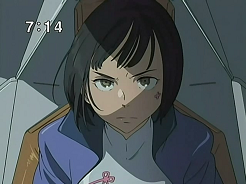
#3: The Law of Ueki – I consider this both as one of the best comedies and shounens out there. It’s pretty silly, but you have to love all of the weird powers that these people have. Not to mention the huge amount of creativity that has been put in the different battles.
#2: Glass Mask – An incredibly in-depth look at acting. This series surely took that extra step towards developing its cast, and what a wonderful drama it turned into.
#1: Eureka7 – A bit of an unbalanced series, but where this series hits, it hits really hard. Renton and Eureka start out as a bunch of random mecha-piloting teenagers, but their development throughout the series is truly memorable.

Summer 2005

#3: Kamichu – Very charming slice of life series. Period.
#2: xxxHolic: A Midummer Night’s Dream – A Very interesting mystery-movie, despite being just a side-story in the xxxHolic franchise.
#1: Pani Poni Dash – Remains funny throughout the majority of its airtime, quirky style. A successful comedy.

Autumn 2005
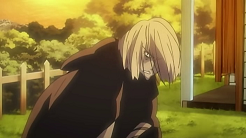
#3: Jigoku Shoujo – Talk about atmosphere. The first season of Jigoku Shoujo was gripping, had some twisted episodes and a great conclusion.
#2: Mushishi – Episodic series can hardly get any better than this. Wonderfully subtle storytelling about deep and thought-provoking characters
#1: Noein – Fantastic action, incredible characters, awesome soundtrack, wonderful storytelling, I’m running out of adjectives here.

Winter 2006

#3: Yomigaeru Sora – Rescue Wings – An anime about the rescue forces. A really good portrayal of what these people can be up against.
#2: Ayakashi – Japanese Classic Horror – Especially Bake Neko was a triumph in storytelling, but Yotsuya Kaidan was also a very good and especially disturbing horror story.
#1: Ergo Proxy – Weird but very imaginative and complex story. There always was something interesting going on with this series.

Spring 2006

#3: Higurashi no Naku Koro ni – When this series first aired, it blew my mind with its gripping mystery-story, characters and disturbing footage. All behind such a seemingly cute exterior.
#2: The Third – The Third has struck me as a very balanced show, with a bit of action, slice of life, science fiction and intrigue, but first and foremost it stands out to me because it features one of the best characters I’ve seen: Honoka.
#1: Simoun – This series is what I consider the best character-study ever. The creators took a very imaginative concept, a group of fascinating characters, and turned into one of my favourite series.

Summer 2006

#3: Otogi Juushi Akazukin – THE series for modern fairytales. It has lots of cameos, and a very cute style of storytelling that makes it a lot of fun to watch.
#2: Flag – A unique series. The entire story is told through the perspective of cameras and photos. The story itself is really slow, but very detailed, realistic and imaginative.
#1: Le Chevalier d’Eon – Despite a slow start, this series eventually turns into a well developed and very strongly directed epic in 17th Century France.

Autumn 2006

#3: Bakumatsu Kikansetsu Irohanihoheto – On top of the action, this show was also a very nice history-lesson for me. Especially the first half had a very strong direction.
#2: Red Garden – Another show with a great cast of characters. What made this series stand out was the amount of detail that was put in their characterization, and especially the dialogue was phenomenal at times.
#1: Asatte no Houkou – Body-swapping: it’s often done for comedic purposes. This series showed how high a serious execution of this trope can reach.

Winter 2007

#3: Master of Epic – For this MMORPG adaptation, the creators decided that instead of creating a serious story like what would happen with most other shows of this kind, they would parody the heck out of it. The result is a very fun and successful collection of sketches that make fun of tons of MMORPG tropes.
#2: Nodame Cantabile – This series succeeded, both as a comedy and as a look at performing classical music and especially directing. Very strong cast of characters.
#1: Les Miserables – Shoujo Cosette – The revival of the World Masterpiece Theatre delivered an incredible series with memorable character-development for just about any member of the cast.

Spring 2007

#3: Toward the Terra – Space operas at their finest. Toward the Terra’s story is bold, imaginative and gets the best out of its cast of characters.
#2: Kaze no Shoujo Emily – An adaptation of Lucy Maud Montgomery’s classic. A really charming slice of life-character study, about living towards your dreams.
#1: Bokura no – I really have to praise Mohiro Kitoh for his truly thought-provoking ideas, but also the staff of the anime, who took an unfinished story, and managed to turn it into something memorable and gripping that perfectly fitted the 24-episode timeframe.

Summer 2007

#3: Sayonara Zetsubou-Sensei – A really good comedy, full of nice references, subtle jabs and witty humour that didn’t turn stale within its 13-episode timeframe.
#2: Higurashi no Naku Koro ni Kai – This sequel to the Higurashi series provided all of the answers we needed. The pacing was much slower, but that really allowed us to get a good view of the characters.
#1: Baccano! – You have to praise Baccano for the way it managed to weave so many different stories about so many different characters into just one series of 13 episodes. There’s always something interesting going on because of it.

Autumn 2007

#3: Mokke – Charming and heart-warming slice of life series about two sisters as they meet various people and supernatural spirits.
#2: Ghost Hound – A horror-series with an incredibly thick atmosphere and a huge focus on psychology.
#1: Shion no Ou – An awesome combination between murder mystery and shougi, thanks to a very snappy sense of storytelling and an awesome cast of characters.

Winter 2008

#3: Hakaba Kitarou – A very interesting combination between horror and comedy. It’s always a guess what this one will go for.
#2: Gunslinger Girl – Il Teatrino – Ah, who cares. I liked this. Completely different style when compared to the first season, but nevertheless it had a haunting atmosphere, and it did manage to catch the essence of this concept.
#1: Porfy no Nagai Tabi – An exceptionally well written and realistic travelling series, combining charming and relaxing slice of life with the dark and lonely parts of Porfy’s life.

Spring 2008

#3: Amatsuki – This show stood out with its really heavy emphasis on dialogue and very strong direction. Now where is that second season!?
#2: Himitsu – The Revelation – I personally loved how this series’ mystery knew exactly how much it should reveal. Suspense at its utter best: you’d never know what would happen next, or where an episode would focus on.
#1: Kaiba – An incredibly imaginative concept with a fantastic story to work with. Very haunting and thought-provoking.

Summer 2008

#3: Ultraviolet: Code 044 – A bold direction along with a very nice storyline to work with. What I loved about this show was its atmosphere and strong cast of characters.
#2: Natsume Yuujinchou – Natsume’s stories in which he’d meet various spirits is nothing new, but yet again it’s well executed, and Nyanko-sensei is a gem to watch.
#1: Bonen no Xamdou – I don’t think I’ve ever seen a full fledged TV-series that was better animated than this gem. The action was fantastic, and yet this show also spent plenty of time in quiet scenes to flesh out its characters properly.

Autumn 2008

#3: Clannad – After Story – The first Clannad was very interesting, but still a bit formulaic. Then the second season came, and blew all stereotypes away with a heart-wrenching second half.
#2: Michiko e Hatchin – You can trust Manglobe to deliver an incredibly accurate portrayal of Brazil of a few decades back. With incredibly strong characters and an always fun scenario, Michiko e Hatchin really stands out among its season’s best.
#1: Mouryou no Hako – What an intense focus at dialogue. I don’t think that any other series has this much and complex dialogue as Mourou no Hako here, but everything is just so interesting and well detailed, not to mention that the plot is incredibly well detailed.

Winter 2009

#3: Shikabane Hime Kuro – Despite some initial hiccups, Hikabane Hime Kuro continued to raise the bar set by its predecessor, developing its characters and delivering ver exciting action-sequences into a great series.
#2: Kemono no Souja Erin – This really shows the power of long-running series. Throughout the 50 episodes of airtime, the creators are able to provide a very detailed portrayal of its lead character, Erin the beastiarian.
#1: Birdy the Mighty Decode 2 – The first season wasn’t really anything special, but the second season came and improved on it in every single way. The animation is incredible, the characters are really well developed, the story saves enough time to show a bit about the setting and how it dynamically interacts with the main storyline. A real gem.

Spring 2009

#3: Full Metal Alchemist – Brotherhood – For me, this one beats the original series by far. It has a terrific concept and a very well developed setting. (This was another top 3 that was hard too choose: so many series with place 2 and 3 potential).
#2: Guin Saga – Now this is what epic fantasy should be. A large focus on politics and slow character-development. The intrigue was what made this series really memorable.
#1: Phantom – An incredible soundtrack, combined with some really strong development for the lead characters. Phantom stood out with its bold execution

Summer 2009

#3: Spice and Wolf II – This series continued where it predecessor left off, and delivers two well written and intelligent arcs full of witty dialogues and character-development.
#2: Aoi Hana – A very interesting and especially very subtle character-study about a lesbian romance. And for once it isn’t filled with anime stereotypes of this genre.
#1: Tokyo Magnitude 8.0 – A depiction of what would happen if Tokyo were to be hit by an earthquake of the 8.0 on the Richter scale. Shocking, sad, and very emotional.

Autumn 2009

#3: Darker than Black – Ryuusei no Gemini – This sequel went into a completely different direction as its predecessor, but still retains is incredibly strong direction and its message that people die when they fight to the death.
#2: Armed Librarians – The Book of Bantorra. – A breath of fresh air in the intrigue-genre in the way that it continues to defy expectations and twist around seemingly unconnected stories into a whole
#1: Aoi Bungaku – Not only is this series an example of really good storytelling, it also completely changes style for every of the six stories it’s animating. Each of the stories has this unique feel about it, all in their own way.
Konnichiwa Anne – 35


Ack! This is just what I feared. They decided to fill one of the last episodes of this series with this? Oh lord…

This episode… it really showed how the creators aren’t the best at telling a story. Out of all the possible uses this episode could have had to develop the characters, they chose such a far-fetched one that’s solely meant to make Anne look good and attempt (note to attempt) to develop only one single character: Tessa.

I say attempt, because this episode fell into the same trap as all of the other episodic episodes in this show. Way too one-sided and cheesy. I mean, this episode served no point or purpose whatsoever: Tessa already had enough depth. It’s the evil classmates that this series should be worrying about, and yet the creators hardly did anything to make them seem less one-sided than they already were. At this point, there are only four episodes left. This series really needed that time to flesh out the characters in the orphanage. Right now, the orphanage is one of the least interesting settings that this series has taken place in, after the school in Marysville.

And I also have to wonder: why is it that hard to find a subject for this episode? At times like these, I miss Porfy: it really made it seem so easy. It always had some inspiration for an episodic story with a wonderful feel to it. Konnichiwa Anne instead… throws in an abandoned baby. If it’s something that happens once in a while at the orphanage, okay. Then I can understand the need for the creators to address this problem. However, it was a totally unique case! It was just the story of one crazy father who abandoned his son. We never know anything about him. In the end, the creators threw in the baby, just to make Anne look good with her super baby-taking-care-of-skills. And not only that, it also made me aware of a rather nasty flaw of this series: its overglorified portrayal of babies. What happened to the screaming, yelling and whining that these kids keep doing that will even make grown adults pull out their hairs? In Anne of Green Gables, the way they showed that Anne was experienced in taking care of little kids.

Speaking of which… there are like, what? A few months left until the start of Anne of Green Gables? I had hopes for a while, but in the end, no. This girl IS NOT ANNE OF GREEN GABLES. In the end, she really is just a kid who looks like her. Anne has Tessa. There is no reason why she shouldn’t talk endlessly like usual to her. So why is she suddenly the quiet girl who doesn’t talk often?
Rating: – (Disappointing)

November Summary

Overall, this season stands out to me as average, but solid. There are a lot of well written shows, that at the moment just don’t seem to hit any real heights, and yet remain very enjoyable to watch. The exceptions are a number of true gems, though.

#22 (19) – Yumeiro Patissiere – (6,5/10) – I originally planned to continue watching this, due to its surprisingly good start, but unfortunately the past month revealed this series’ true colours. It just keeps introducing cheesy jealous bitches who are in love with the three male bishies that hang around the lead characters. The drama that comes of it is just terribly shallow. Dropped.
#21 (22) – Winter Sonata – (7,5/10) – Really hard to say anything about this series due to the slow subs. The only episode released this month was a bit cheesy, and it feels like entire scenes are missing, or something.
#20 (21) – Kobato – (7,5/10) – Right now, Kobato still is pretty dull, but at least you can see that the characters are getting fleshed out and explored. What the series needs to do is keep this up, and USE this in the second half to develop them.
#19 (24) – Kimi ni Todoke – (7,75/10) – I’m still struggling with Kimi ni Todoke, but there’s some definite potential. It’s pretty good when it doesn’t pretend to be anything: the dialogue is inspired and well written. However, the cheese during the dramatic parts is just way too overdone.
#18 (14) – Letter Bee – (7,75/10) – Still building up. You can see that it’s building up to something interesting, but it isn’t quite there yet. In the meantime, I’m just enjoying Nichi’s antics.
#17 (20) – Kaidan Restaurant – (8/10) – It’s a bit childish at times, not to mention that the lead character must have really angered the gods badly for her to run into THAT many ghosts, but the horror works surprisingly well. The quick horror stories all do their job of being creepy, and it’s always interesting to watch these episodes.
#16 (17) – Hetalia Axis Powers – (8,25/10) – I must say, that that second season of Hetalia has become much more balanced than the first one. It doesn’t endlessly keep hanging on the same jokes, and instead delivers varied and fun jokes. Very nice.
#15 (15) – 11eyes – (8,25/10) – This series is still going strong for me, although I do find Yuka a bit hard to swallow. Her characterization for me just doesn’t work, and it’s very annoying to watch her angsty romantic issues.
#14 (10) – Anymaru Tantei Kiruminzoo – (8,25/10) – This really turned out to be surprisingly good. I especially love how this series doesn’t just have people, transforming into animals, but also animals transforming into people, with hilarious results as they try to make sense of humans. The story also is a bit more than just “monster of the week” as well. It’s obviously a bit of a stupid series, but for me it’s been very enjoyable.
#13 (9) – Tentai Senshi Sunred – (8,25/10) – This is very rare for a comedy sequel: it’s actually better than the original series. While the first Tentai Senshi Sunred had its share of weak episodes, the second season doesn’t, and every episode is a hit and cracks me up with its typical sense of humour, combining detailed realistic dialogue with incredible stupidity and Super Sentai Parodies.
#12 (3) – Full Metal Alchemist – Brotherhood – (8,25/10) – This month was mostly building up, and that’s where Full Metal Alchemist’s big weakness lies: it may be very exciting at times, but it does take quite a while to get there. At those points, it just loses out to other, better-paced shows. Do note that this score reflects on just the episodes that aired this month; NOT the entire series.
#11 (13) – Konnichiwa Anne – (8,25/10) – A very good month for Konnichiwa Anne. Not stellar, but Anne’s development has finally started tying this story to Anne of Green Gables. There are some animation errors, but so far this series has been able to avoid the biggest pitfalls. Now let’s hope that this series can pull off a good finale.
#10 (12) – Sasameki Koto – (8,25/10)

I’m surprised: this series is still going strong. The characters are very genuine, which really helps the seemingly formulaic premise. Especially the relationship between the lead characters is fleshed out really well

#9 (1) – Umineko no Naku Koro ni – (8,25/10)

A bit of a step back when compared to the previous month, but again, you can see that this show is building up. Ange herself isn’t the most interesting character, but let’s see whether all of the build-up can pay off in the end. Again, this relatively low score is just for the episodes of this month. I’d rate the entire series higher, depending on how good the final parts of this series are going to be.

#8 (8) – Marie & Gali – (8,5/10)

The only thing I dislike is the constant hiatuses that this show keeps taking. Apart from that, I’m amazed that it still hasn’t run out of creativity in the slightest. Every episode is a hit, that keeps putting in new ideas.

#7 (11) – Kuchuu Buranko – (8,5/10)

This show has really gotten better and better: the cases have become more complex, interesting and funny, plus, all of the references to past episodes really work.

#6 (7) – Cross Game – (8,5/10)

Great month for Cross Game. Akane really brought in a new spark that influenced nearly every single character in the series, which really brought the spark back in this series’ slice of life.

#5 (18) – White Album – (8,5/10)

You know. Call me crazy, but I like this show again. It’s just unique; first of all it’s School Days but actually well written, but also the writing really gets the best out of the characters, and unlike the first season it allows for very emotional scenes without the usual soap opera cheese that accompanies them. But yeah, Touya still is an incredible asshole. 😛

#4 (5) – Kemono no Souja Erin – (8,75/10)

Even though the end is near, Kemono no Souja Erin still continues with its quiet and focused pacing, and that in no way prevented the plot twists that arrived in this month from creating impact. Very fitted for a prelude to the finale.

#3 (6) – Darker than Black – Ryuusei no Gemini – (8,75/10)

The major thing that my three favourites this season all have in common is a very strong direction. Darker than Black knows exactly how to deliver its story and make it exciting. It also takes care to develop its characters and really makes use of its limited airtime this way.

#2 (4) – Armed Librarians – The Book of Bantorra – (9,25/10)

What a breath of fresh air. The direction of Armed Librarians is bold and daring, and I just love the way in which this series keeps tying seemingly unrelated plot threads to each other in the end. Here’s one series that continues to defy my expectations of it.

#1 (2) – Aoi Bungaku – (9,25/10)

There should be more series like this, seriously. Every story so far has been unique and different, and all of them have been made based on great ideas. In the Woods… was an awesome mind-screw, Kokoro was a terrific character-study told in two different perspectives, while Hashire Melos is beautifully animated and directed.