Full Metal Alchemist – Brotherhood – 49


Sorry, but I have to get back to Pride again. I just keep wondering what it means to be considered “the strongest” homunculus, and whether he can really be measured as such, especially considering the other homunculus. Does he have the biggest amount of strength of the homunculi? I doubt that actually, considering Sloth and Envy. The biggest defense? Nah, Sloth and Greed are also incredibly sturdy. Meanwhile, I believe that his speed is about equal to that of Lust and Wrath. I think that what sets him apart is more his combination between strength and range of weapons that can hit from multiple directions.

So while he might be considered the “strongest” homunculus, I doubt that he’s been the most useful one. He might have the upper hand in battle, but he never uses that. Ed in this episode could be excused, but what about the others? He could have easily killed all of them, and yet only the lion got a few wounds that don’t seem too serious. Compare that to Wrath’s battle against Greed, in which Wrath just kept pushing his attacks on Greed, leaving as little opportunity as possible for Greed to recover. That’s something I consider stronger than some kid who holds a lot of power but doesn’t use it, and I believe that Wrath would actually be able to make minced meat out of Pride if they ever were put up against each other. And even Ed: why didn’t Pride just grab him in the way that he took control of Al?

In any case, that didn’t mean that I didn’t like this episode. It was another excellent build-up to the inevitable promised day, and how different parties are coming together again. I liked how the four chimeras finally saw each other again (not knowing that they’ve decided to betray Kimblee). And despite my gripes about Pride’s fighting ability, the part about his relationship with his ‘mother’ was definitely interesting.

As for Roy’s plans, I’m also curious about those ones: what was the point in kidnapping Bradley’s wife: the end of this episode showed that the military clearly doesn’t intend to consider her safety; especially with Bradley gone now. Next episode should again start with an intense action scene in which we can finally see Roy in action again.
Rating: ** (Excellent)

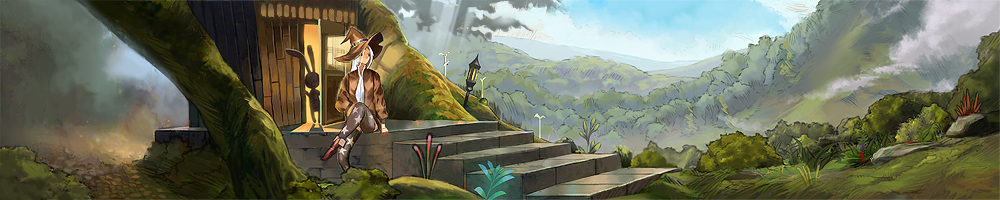
On a side-note: I finally changed the banner for this site, after having the previous one for more than three years by now. The image comes courtesy of Rel, an amazing artist. I’ve made a few other potential banners in the process. Do you suppose that these might look more appropriate?

After this I’m planning to overhaul the side-bar. My plans are to:
– Move the most recent post upwards for easier browsing.
– Sort the series entries on recommendation-worthy.
I’ve also been toying with the idea to include a small section containing a link to my favourite episode each week, or something similar. How does that sound?

Cobra The Animation – 12


So this was the build-up before the finale. Nothing remarkable is really to say about it, but it wasn’t bad either, and still solid Cobra-esque entertainment.

Overall, I really had my doubts when I found out that Osamu Dezaki wasn’t involved in the production of this series, and it really shows: despite a few shots, this series really went with its own direction in its attempt to pay homage to the Cobra manga. And you know what, it worked? As an adaptation of a very old manga, this series did just about everything it should have done.

But guaranteed, I am still dying for more Osamu Dezaki. It would be awesome if we could get another series like Ultraviolet: Code044 which really allowed this guy’s style to shine at its best. Nevertheless, looking back to this series it really has been fun. And it finally showed that fan-service can be more than just showing under-aged teen-aged girls. Sure, the characterization is as far from realistic as possible, but that’s part of this series’ charms.
Rating: * (Good)

Letter Bee – 24


Studio Pierrot… what do you think you’re doing here? My gripe with this episode is small, but it’s still very strange for such a thing to have happened: remember the episode that talked about Zazie’s past? This episode acted like it never happened, showing nearly the exact same flashback twice. Why wasn’t this caught? Adapting a manga isn’t just a matter in which you animate every page accurately. Story flow comes before the need to be faithful and if the creators decided to flesh out Zazie more in a filler episode (which of course was a nice idea), they also need to readjust the point in the manga that they tried to expand.

So yeah, that and the dull fight in this episode didn’t impress me at first. I think that overall, the Gaichuu fights in Letter Bee have all been unimpressive and mediocre. All of the interesting stuff happened around them and the fights were just something necessary to get to them. You really don’t want to watch this series for its action.

Still, when that Gaichuu started gobbling away that girl’s memories, I have to admit that I was totally reminded of why I’m still following this series. That’s the strength of this series: it’s seemingly stupid at times, and doesn’t have the best writers, but surprisingly heavy. Characters may seem like annoying stereotypes at one time, and yet I find myself to care about them once their memories get shown. It’s strange, but as mediocrily (is that a word) told as the regular story is, these memories are all told remarkably well.

Also, Gauche still remains a mystery. Considering that there are only two episodes left, I really wonder how much we’ll get to know of what the heck happened to him, before the long six-month wait until the second season appears. Right now things hint at an accident that happened somewhere around Honey Waters, and could it be that particular Gaichuu that got him? It’s unlikely, though: he was supposed to be the best Bee out there.
Rating: * (Good)

Musashi – The Dream of the Last Samurai Review – 57,5/100


Mamoru Oshii… what exactly did you have in mind when you thought up the premise for this movie? What was the point? What did you want to prove? For God’s sake: why?!

I was actually looking forward to an anime documentary of Miyamoto Musashi’s life. Especially with the staff behind it. I’m a big fan of historical stories, and also of anime that put a heavy emphasis on dialogue, which is amongst Oshii’s trademarks. But this was just… too much. This movie is just… unbelievable. It’s seventy minutes of incoherent rambling that never seems to stop. As an anime, it fails. As a documentary… it fails as well. And as an experimental work… well it is unique, but this just didn’t work.

Ultimately, this movie has become “Musashi’s best fights animated, while some badly animated narrator gives a lecture about warfare”. And when I say badly, I mean that the animation for this guy is utterly terrible. There are so many things wrong with him, and he should never have been animated. The 3D CG he is animated in looks horrible, and the overall animation of this guy screams cheapness. He also has this strange female assistant who keeps making unfunny slapstick joke after unfunny slapstick joke in the background. These two distract way too much of what’s really important in this movie: Musashi himself.

Speaking of distracting… the dialogue also gets distracted by a ton of unrelated things. An example is one of the narrator’s seemingly endless monologues about warfare in Medieval Europe and Asia’s mainland. The topics he discusses are varied, but the dialogue itself is also so boring that I stopped caring about it it halfway through the movie, as it failed to give any characterization to Musashi himself, who really does nothing but fight as he’s shown on the screen.

Aside from the ugly CG, there also are a ton of live-action shots, and pretty much the only images where some effort has been put in is the shots of Musashi. Which basically amounts to 10% of the total airtime. And yes, this is coming from Production IG, Mamoru Oshii and the director of Otogizoshi. The music is pretty much the same: it’s catchy and nicely composed whenever Musashi is in the image. When he’s not, however, the music starts playing random classical tunes that have nothing to do with what’s being discussed, and were probably just chosen because they lack any licensing issues.

It’s also a joke how this show was advertised: “After years of movie hagiographies and mythification, the great Mamoru Oshii has seen to promoting this funny and profuse documentary that combines the most diverse animation techniques with historical rigor and rokyoku sung narrative.”. Mamoru Oshii originally thought of the premise; it’s no wonder he would promote his own creations. It talks down on all of the Musashi films and adaptations. It’s not funny. The animation is in no way diverse: it just has three styles: ugly CG, live-action backgrounds and traditional animation. Studio 4C could out-animate this movie to the moon and back in terms of diversity. And the “Rokyoku sung narrative” has been done by a ton of other series already, defeating the purpose of this experimental movie.

I hesitate in using the word ‘pretentious’, because I often see it misused by people for ‘a show with a ton of complex dialogue’. But I actually believe that this movie comes pretty damn close to it. It treats itself like it’s the best adaptation of Musashi out there, while the dialogue looks more like endless rambling rather than contributing to the characterization or actual storytelling.

Storytelling: 5/10 – The only things we get to actually SEE of Musashi are his most famous fights animated.
Characters: 6/10 – Musashi never speaks. Instead, the narrator does everything for him, and this guy is ANNOYING.
Production-Values: 4/10 – Pointless use of famous classical music, really ugly CG. Only Musashi looks good but it’s nothing compared to Production IG’s usual standards.
Setting: 8/10 – But I guess it’s a nice enough show about medieval warfare in general.

Armed Librarians – The Book of Bantorra – 25


Ah, what an episode. At this point the creators of the anime were standing for a major dilemma that hits just about every series out there: the fact that the story doesn’t fit exactly into 26 episodes. I’ve raged enough about this problem with other series, but with this series, they’re actually pulling it off to put the essence of the final novels into these final episodes without derailing. This series is everything that fantasy and steam-punk should be, and it seriously set the bar much higher for future generations. Even until this episode, it kept an excellent balance between plot, setting, characters, background and action. Each speaking to the imagination.

One of the major pitfalls of mystery series is the point at which questions have to be answered. Asking a lot of intriguing questions is one thing, but it takes skill to make all of eventual answers live up to the hype that these questions created. And this show even proved that these answers kick ass. We finally get a glimpse into heaven, and what it’s like. And we finally get to see the background story that resulted into everything: Ruruta Coozancoona’s. We already could have guessed that the Armed Librarians and the Church were created in order to create exciting books. This episode didn’t just show why this was all done, it also showed the story behind it. That it was all in an attempt to destroy the gods who kept destroying the worlds they created because they were unhappy with the continuous wars.

When you think a bit further, this had some interesting results: these Gods surely were short-sighted bastards. Thanks to Ruruta the world wasn’t destroyed and instead it continued to thrive. The result? A stable world full of actual democracies, in which most of the drama is caused by the guy who took god’s place: Ruruta, and his wishes to provide interesting books in an attempt to bring back his loved one.

The big question still remains however: what the heck is heaven? The people we saw gathered in the theatre: what exactly was their connection? Since the previous governor of paradise was among them, it may be a place where the true men gather: the ones who came closest to Ruruta’s ideals for the perfect book (which would also explain why Hamy ended up entering it even though her hook didn’t appear yet).
Rating: *** (Awesome)

Durarara – 11


I’ve been waiting for this episode: the point at which this series carries itself to a higher level. It’s here where it grabs the build-up of the previous episodes and develops it. And I have to say that it’s here where this series has become something truly unique. What an inspired episode.

It was a very interesting choice for the creators to make Mikado seem like your average teen-aged lead at first. At the time he was introduced, he indeed seemed like another one of those cliched leads that you see everywhere. But at the same time, he ended up becoming a perfect character to play around with, because of the expectations we have of these kinds of characters. Most notably, the fact that they never seem to have any background. It’s one of the many stereotypes of anime: your dull lead who’s supposed to be your average lead, but because he’s trying so hard to be average he never stands out at anything. Instead, Durarara has really shown that it’s a series in which all sorts of interesting people meet. Who in turn are just a small fraction of all of the interesting people that walk around in the city. I really have to applaud this series for that.

But what impressed me the most, and what set this episode really apart, is the execution, especially what happened after Mikado hit that send button, and every gray person suddenly started to get colour. It’s the kind of thing that never would have been possible without the previous build-up of this series. The way it was delivered, by showing the reactions of everyone standing in that street, along with Celty’s breakdown made this episode into a unique experience for me.

And yet you could also see a ton of stuff that’s borrowed from other series. The most notable was of course that the creators pulled a Clamp around the middle of this episode, with Isaac and Miria making actual cameos (I’d sell my hat of a shot of these two, going to the theatres and watching Baccano). There’s the flashback, just in the middle of a climax, explaining everything that just happened (a technique that’s also loved by the Armed Librarians), and the tons of pop culture references that had to be slightly modified due to copyright issues.

But most of all, I saw this episode as a celebration of the opportunities of modern social networking. As someone who’s also often on the Internet and who also has been involved in the creation of various communities, I could very much relate to Mikado as he and his friends created the Dollars. And meeting interesting and different people is exactly what I love about the Internet.

Despite its unique approach, this isn’t the first anime to focus on online communities. Mostly science fiction, series as Serial Experiments Lain, Master of Epic, .Hack//Sign and Real Drive also got to show their take on them (and yes, I’m a really big fan of those kinds of series). One thing that I’ve noticed however is that so far, there’s been one big part of the Internet that has been pretty much ignored: the idiot side of the Internet. There also are a lot of morons and spam-bots on the Internet, but you often see anime focus on the positive and progressive sides. While it might lead to a more complete image, but then again things like those would be rather hard to watch.
Rating: *** (Awesome)

Mobile Suit Gundam – The 08th MS Team Review – 80/100


Those who know this blog probably know that I’m not the biggest fan of Gundam, neither UC or the New Generation. However, there are exceptions. This one included.

It’s far from perfect, but the solid execution, characters and avoidance of a number of annoying Gundam tropes made me enjoy this series a lot more than most of the other ones of this franchise. The 08th MS Team tells about a small squadron of five people, stationed somewhere in a jungle, near the frontlines. It shines in how it portrays these characters, and the tension that erupts from having to work so closely together so often. I personally really enjoyed the chemistry between these five, and it also helps that the lead character himself belongs in my top three of Gundam Leads: while bratty at first sight, this guy is mature, intelligent and has a sense of leadership that’s very rare amongst main characters of his kind. Sure, he does have some of the flaws that’s become a bit too typical of Gundam (ignoring orders, anyone?), but he had this refreshing sense of charisma that felt like a breath of fresh air amonst all teenaged mecha pilots.

More Gundam Tropes were avoided this way. I was pleasantly surprised at how the creators didn’t go through ridiculous lengths to give the lead character the strongest mecha possible: the lead character trashes quite a few of his mechas along the way, and as a consequence he ends up piloting less impressive-looking ones. Battles are also much more a matter of tactics, rather than random shouting and endless battles in which everyone ends up retreating. Overall, I was pleasantly surprised by this series, especially the middle part.

There also was a lot for me to dislike, though. Most notably, the bad guy. This guy was pretty pathethic throughout the series as he tried to carry out his plans, and the creators tried to explain some utterly non-sensical things just on his insanity like it was some sort of magic plot device. I guess that the intention of the creators was to show some sort of moral, in the way of “even though no side wishes for war, it’s always ruined by some moron who doesn’t think straight”, but for that to work I would have really liked some more depth on these morons.

Speaking of ‘war is bad’, it’s prevalent in this series too, but I feel like these themes are a bit too underdeveloped as well. It doesn’t really mesh well with this series’s other themes, resulting in how battle-hardened soldiers suddenly start rambling on cheesy ideals that feel more like the writers’ opinions than that of the characters themselves. I’m overall a bit iffy on the character-development: it’s very prevalent, but in a few cases (for me the most notable were the main villain, Eledore and Michel) it felt like the characters just changed character, rather than evolved.

It’s also got a really weird final episode, especially for its time. You can pretty much see it as the prelude to those exclusive DVD-only episodes, that tackle a topic that hardly has anything to do with the main storyline. Overall, the idea was very nice, and was definitely an interesting way to close off such a series, hampered only by one particular very obnoxious and stupid character.
Yes Michel, that means you.

Storytelling: 8/10 – Great atmosphere and the look at war through the eyes of a common soldier. Only becomes too epic for its own good in its final quarter, rather than its final half.
Characters: 8/10 – Excellent chemistry, character-development all over the place. Emo villain.
Production-Values: 8/10 – For Gundam’s standards not the best, but well detailed animation and decent enough music.
Setting: 8/10 – Showed a different side to the UC universe than most other Gundams.

Kobato – 22


It’s beautiful episodes like this one that totally restore my faith in anime. What a wonderful example of how to write a touching story without the biggest budget, epic backstory or over the top plot twists. The character-development in this episode was all worth the wait and the first half, and a heart-warming prelude to that finale. I laugh at articles like this one (well, the ‘anime sucks’-section anyway), which paint a completely biased and one-sided picture of the current state of anime.

I love it when a series changes my perception of things, and for me, Kobato restored my faith in these simple series that might not amount to much at first. Despite its mediocre start, I’m emotionally connecting to this series, more than just about every other series this season. This is really what a drama should be.

I also think that this is one of the few good uses of the “crash before the ending”-trope. Just like with White Album’s second season, Fujimoto’s crash was nothing serious, and instead more meant as a wake-up call, rather than creating some cheap drama by placing someone in the hospital. On top of that, it was also well built up: in his state of mind, it’s not surprising that Fujimoto wouldn’t pay attention to the road.

To be honest, out of all the series that are about to end in the upcoming weeks, Kobato’s is the one that I’m looking forward to the most. It’s really been building up to that final episode through its entire airtime, and out of all the endings, it’s this one that I feel has the most chance of actually turning out great. It’s the kind of ending where the creators have to really screw up big time to ruin it. Especially considering how the creators wrecked the kindergarten in this episode, it shows that they’re not going to force down a happy ending if it doesn’t make sense within the story.
Rating: *** (Awesome)

Sora no Oto – 11


Yes! Yes! Yes! It’s going as I hoped: this episode started the finale, which is both at the same time hard-hitting, yet stays true to the main cast. The drama in this episode was powerful, and instead of moving the main cast to the conflict, it moved the conflict to the main cast (makes sense, trying to hit an outpost rather than a well defended city). The war is about to begin, and yet this series did not forget that it’s also a slice of life series, and saved a good number of minutes, just for that purpose.

The only thing about this episode that was questionable… was Noel. I mean, it’s a bit late to suddenly reveal that she used to be a genius young scientist; my suspense of disbelief was about to break when that revelation suddenly came from out of nowhere. I mean, a princess is one thing, but a genius young girl who saves the war with her own inventions is on a whole new level.

Thankfully the rest of this episode was awesome enough to make this insignificant. There was plenty of character-development now that Rio is gone, the animation was as imaginative as always, and I loved how this episode showed that both Helvetians and Romans can be quite nice people when they’re not trying to kill each other.

And the creators actually thought of language boundaries. The Roman people actually spoke German. And it’s not like we heard one word or something, no. This woman uttered entire monologues in German; the creators cut no corners in making her ramblings believable. And I must say, Japanized German sounds surprisingly good. The European languages all sound very different when the Japanese try to speak them. Their Dutch is fairly good, mainly because a lot of our vowels sound similar (for an example of that I direct you to a certain episode of Samurai Champloo). German also survives fairly well, as this episode showed. English is a bit different, as it often gets raped by voice actors who have no idea about their pronunciation. By far the worst I’ve heard, however, is French. Seriously, whenever the Japanese try to say it, it’s not French anymore. Its just become gibberish.

In any case: that finale. Right now it’s very tempting for the creators to Deus ex Machina that enemy army away with that priestess legend from the first episode. With all of the build-up of this series, a lot depends on that final episode: bring those themes together! Get the best conclusion out of those characters! Do something unexpected that lifts this series to a higher level, yet doesn’t derail it!
Rating: ** (Excellent)

Victorian Romance Emma – The Second Act Review – 87,5/100


My one big fear for the second season of Emma is that it would be too ambitious. You know, when a formula works in one series, the creators try to do the same, only bigger in the sequel, ruining the subtlety that made the original so wonderful. And indeed: Victorian Romance Emma’s second season is a lot more emotional than the first. But it still works wonderfully. What a great romance series!

And granted, while this season isn’t as subtle as the first, it packs a punch with powerful character-development. It’s all about making difficult and life-changing decision that all have their consequences, inside the uptight English noble culture of a few centuries ago. Emma herself still is a wonderful character, with an excellent combination of strengths and weaknesses. William, the male lead also grows tremendously throughout this season.

The animation quality is also surprisingly good for a slice of life series. The poses are creative and consistently detailed with a great sense of aesthetics. The soundtrack is also even better than the first, with a lot of simple but powerful piano tunes, and other kinds of classical instruments.

In order to tell its story however, this series does pull a few coincidences that might not fall well. The way that the story is continued is a bit questionable, and the climax as well, while closing off the characters wonderfully, does include a few strange accidents, that curiously all happen at the same time.

Nevertheless if you ignore that, then this is a series that’s very well built up. Like the first season, it’s a series in which not a lot happens, but that allows the creators to really explore whatever does happen in great depths. I’ve never really understood the appeal of the maid fetish, or why so many series need to have one for God’s sake, but this is a worthy exception: mature, engaging and heart-warming. A recommendation for everyone who likes history and romance.

Storytelling: 9/10 – A few coincidences don’t stop it from being very well built up and giving everything ample time to develop.
Characters: 9/10 – Wonderful characters with great development.
Production-Values: 8/10 – Very solid.
Setting: 9/10 – Excellent depiction of Victorian England’s upper classes.