Wooper: Anime as a whole has fallen on my list of priorities as of late, so this post is three weeks behind schedule. Great series continue to emerge season after season, yet my free time is increasingly captured by live action film and TV, prompting me to ponder how much longer I’ll continue blogging at my already lethargic pace. My current plan is to watch and write about one episode per day going forward, with a new post going up every eight days. A preview for the upcoming summer season is a sure thing, too, but beyond that, I don’t know what the future holds. As for the present, I’m watching just four shows this spring; we’ll start with my least favorite of the bunch, demoted to that position owing only to the strength of the other three.
Witch Hat Atelier – 2-4
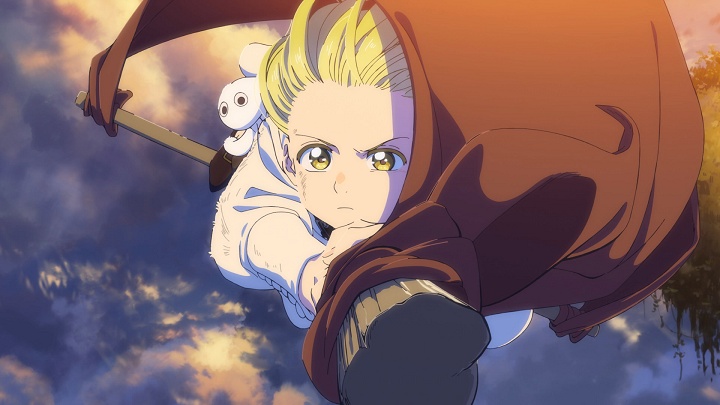
Witch Hat’s beautiful art and animation have made it spring’s breakout series, but I feel a bit out of step with the consensus opinion here. After Coco and Qifrey concluded the premiere by departing for his atelier, episode 2 offered virtually no surprises. They arrived, she met the other students, took a brief tour, and began her studies. Her hesitation to begin using magic was conveyed verbally more than visually, and her new peers’ personalities were fairly one-note – even Agott, a temporary antagonist if I’ve ever seen one, was condescending to the point of predictability. Episode 4’s trip to Diagon Alley Kalhn didn’t sell WHA’s world to me, either, as I was distracted by Qifrey’s decision to put Coco in the eyeline of hundreds of other witches, then take his own eyes off her multiple times, despite her importance to more than one of the show’s magical factions. Thankfully, the third episode’s eye-popping flight animation and effective linking of her abilities as a craftsman and witch created a high-water mark for the series, which I’m hoping it will match before long. We just need to get through this introductory period where Coco lags behind the other students and the Brimmed Caps are treated as some distant threat. More screen time for the brushbuddy (my favorite character so far) wouldn’t hurt, either!
Awajima Hyakkei – 2-4
Forget “season sleeper” – Awajima Hyakkei is already the dark horse of the year. This series’ audience is tiny, but its theming is extremely strong, following up its premiere’s tale of two girls separated by talent and ambition with three similar stories, all of which explored that template through new character pairings. Episode 2 featured Emi and her childhood friend Etsuko, the latter of whom maintained fruitless faith in her friend’s talent even after Emi applied for theater school and left her behind. Number 3 took a different approach, briefly introducing successful actor Masato as an encouraging presence in the life of the untalented Ruriko. And the most recent episode opened with Kayo and Saori, two former Awajima co-stars who remained in each other’s orbit as adults despite only one of them pursuing the arts full time. All of these episodes were split into multiple chapters, each opening with title cards that included the names and images of their principal characters. That means all the stories I just listed constitute only ~33% of the show’s material from the past three weeks.
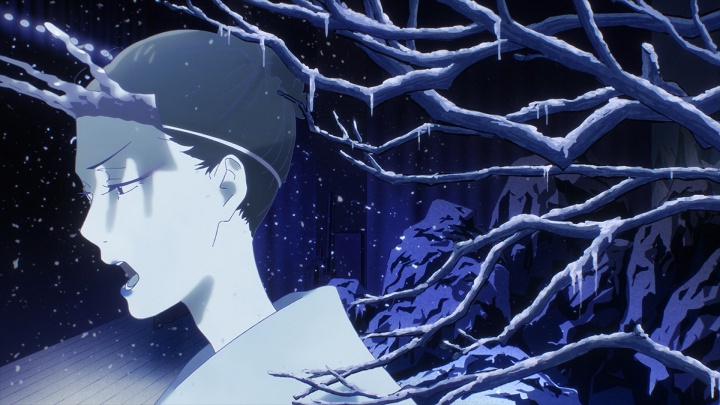
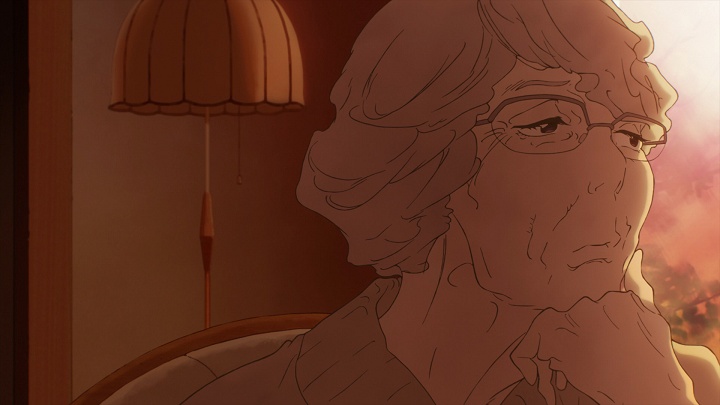
Like last season’s Ikoku Nikki, Awajima Hyakkei makes me wish I still had the time and energy for weekly blogging, as the series is so densely written that a biweekly format doesn’t leave room for sufficient analysis or praise. Episode 3 in particular was fabulous, steadily cutting between three generations of Awajima-educated women to demonstrate the impact that a lack of maternal love can have on children and grandchildren. Images of shriveling lilies accompanied the deaths of a matriarch’s loved ones, leading her to treat her remaining family with bitterness, which came back around when her own granddaughter told her to “die in anguish” shortly before her passing. The wrinkled linework in one of the screencaps above showcases her frailty from that time period, but only emotionally – other shots depicted her as beautiful, even in old age, so it was strictly her collapsing ego that was represented in that moment. And when the episode shifted to center the student life of the aforementioned granddaughter, her sole artistic triumph was followed by similarly striking images of her family, friends and rivals staring at her on stage, her inherited bitterness reflected in their gazes. Even if you set its excellent third installment aside, Awajima Hyakkei was consistently good for all of April – fans of human drama who aren’t watching this one probably should be.
Dorohedoro S2 – 2-4
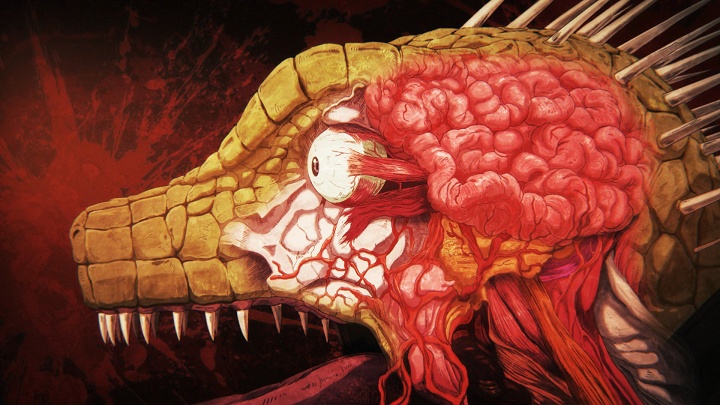
Dorohedoro is back after a six year absence, and it’s just as bold, bloody, and bizarre as it ever was. You could argue that all three of those aspects have been intensified for this second season, but if I had to pick the one that leveled up the most, it’d be “bloody.” Some of the butchery in these three episodes has topped everything from its 2020 run, especially the episode 4 scene of an avian monster inserting a pair of knives through a hole in a devil’s head, then dicing its victim to pieces from the inside. I’m not a gore enthusiast, but Dorohedoro’s brand of violence is so divorced from reality (and balanced by such off-kilter humor) that it doesn’t put me off in the least. The show also knows when to omit moments that might be truly upsetting, such as our hero’s scale-ripping bout of self-harm during his vision of the man inside his mouth. That vision was so tantalizingly portrayed, using a string of identical doors as a window into Caiman’s fragmented psyche, which was both an extension of and a step up from the first season’s visualization of his mental plane.
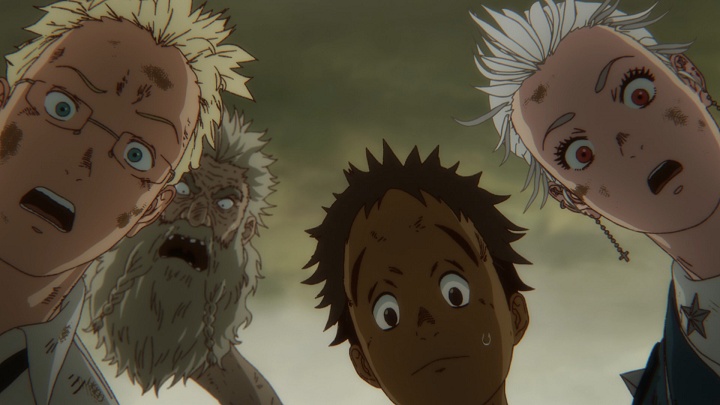
Speaking of Caiman, he didn’t appear until the 14, 9, and 10 minute marks of these episodes, respectively. At this point, Dorohedoro is following so many characters that its initial protagonist is only a small part of the puzzle – an approach that I absolutely love. The Cross-Eyes have emerged as primarily comedic figures who nevertheless possess crucial secrets, making them a fitting metaphor for the show’s strangely appealing mix of tones. Doctor Kasukabe’s increased role and relationship with his devilish wife are super intriguing, as are the recent flashbacks to Nikaido’s childhood. The show’s playfulness in withholding key information, particularly in the latter area (Chota’s whimsical personality causes interruptions in his perusal of Nikaido’s diary), only makes me want to keep watching that much more. Episodes 5-10 are already out, but seeing as this season is scheduled for just 11 episodes total, I figure I’ll watch it in tandem with all the other spring series. It’ll last longer that way, you know?
Nippon Sangoku – 2-4
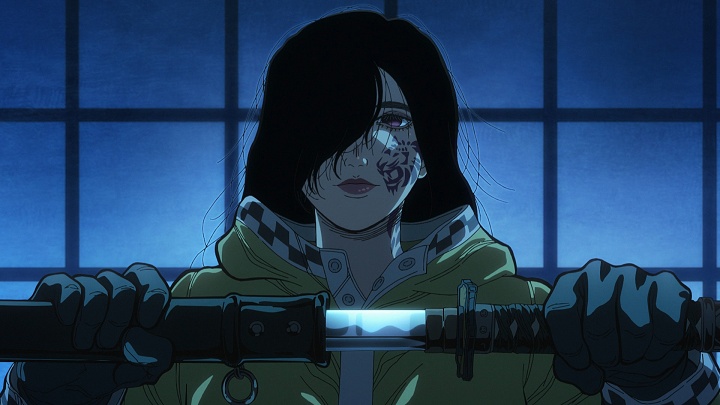
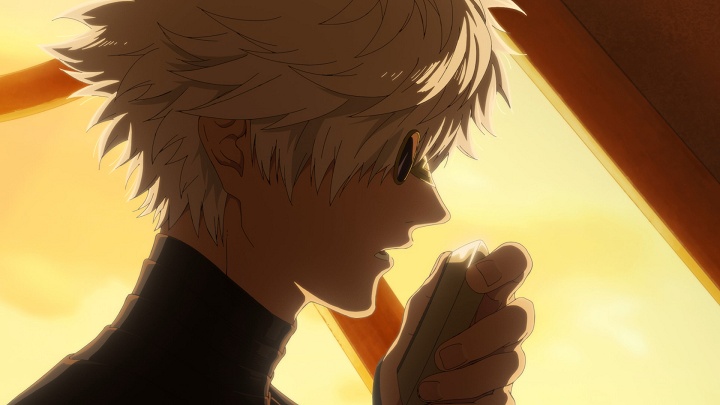
Rounding out my personal trifecta of the season’s best series (through the month of April, anyway) is Nippon Sangoku. Like the two shows above, it’s very information-dense, an issue that’s compounded by its unreliably translated on-screen text. When characters are already speaking as the text appears, it’s typically not acknowledged by the subtitles – but now that we’ve made it through four episodes and met most of the important players in two separate kingdoms, it’s possible to tread water behind the narrative’s powerful stroke. Proof of its power lies in the amount of time that passes during these three episodes: nearly three years, in which time Aoteru travels to Osaka, impresses Yamato general Ryuumon Mitsuhide with his agricultural reform plan, and receives a promotion to the post of Auditor. His newfound power allows him to clean out the corrupt officials in Yamato’s borderlands, earning him plenty of enemies in government but further praise from Mitsuhide. (Incidentally, Mitsuhide is likely modeled after the similarly named Nobunaga-slayer from Japanese history, despite Nippon Sangoku being a reinterpretation of the Chinese Romance of the Three Kingdoms.)
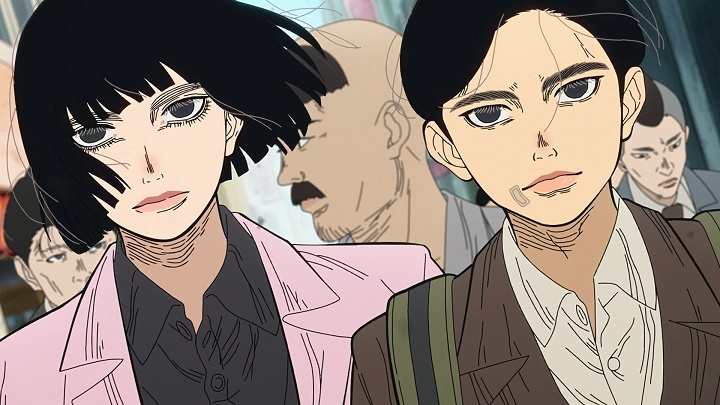
The story doesn’t stay confined only to Yamato, of course. Episode 4 ventures northward to Seii, where Wajima, an expeditioner’s daughter, plots a coup d’etat in order to prevent the kingdom’s surrender to Yamato. She relies on her beauty to charm the impoverished citizenry while distributing porridge, but her true face – the one of the tactician she was molded to become – is much stonier. There’s a bigger contrast between her inner and outer selves than there is in Aoteru or Tsune-chan, an ambitious officer in the Yamato army. Aoteru is a fast talker, but his public ideology more or less lines up with his private stoicism, while Tsune-chan is boastful both inwardly and outwardly. This positions Wajima as one of the show’s most threatening characters, perhaps second only to Denki Taira, the murderous father-in-law of Yamato’s ineffectual emperor (perhaps destined to be deposed himself, if his surname’s relation to The Tale of the Heike is any indication). Episode 3’s imperial council meeting shows him humiliating his son by marriage, leaning heavily on the comedy before his political opponents’ heads start rolling. Nippon Sangoku’s bold-lined character designs put in a lot of work during these scenes, so while the animation was limited, the show’s tone remained consistent, playfully contrasting the presences of those with influence and charisma and those without them.
