Wooper: We interrupt your just-begun spring 2026 impressions with some final thoughts on four just-wrapped winter anime, plus one that began an unceremonious pause after a double-length premiere. There are a handful of winter shows I didn’t cover that will require a fair shake before EOY (ShiboYugi chief among them), but this is all I’ve got for now. Alright, back to the First Impressions grind!
JoJo’s Bizarre Adventure:
Steel Ball Run – 1
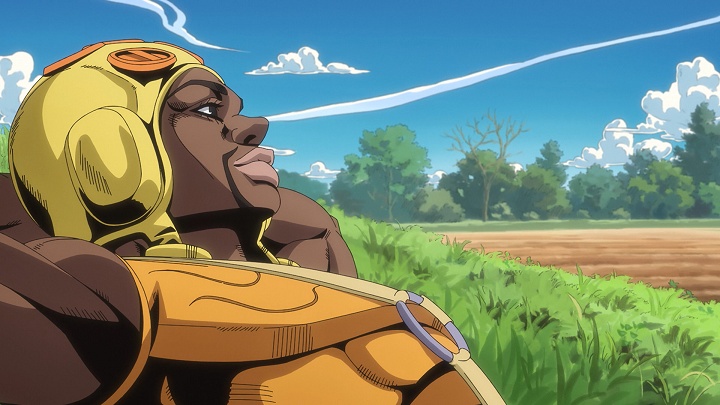
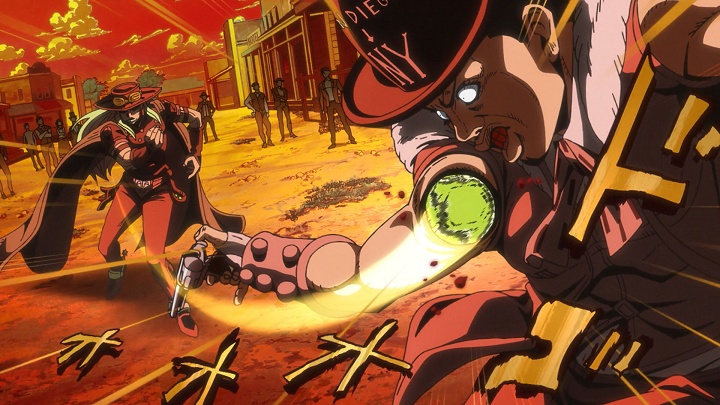
I hadn’t tuned in to a JoJo anime since bailing on Diamond is Unbreakable nearly a decade ago, but Steel Ball Run presented an opportunity to give the franchise another spin, since it takes place in a separate universe. Its continuity is so fresh, in fact, that it places more emphasis on the titular cross-country race than any of its familiarly named characters – with the exception of Johnny Joestar, who receives a rather momentum-breaking flashback explaining his paraplegia. That scene’s blunt implementation didn’t inspire much confidence that future flashbacks will blend in well, and there will probably be many of them, since the race started so quickly that a lot of pre-race context will become necessary as the story evolves. This two-parter did keep a lot of other details close to its ridiculously costumed chest, such as the nature of Gyro Zeppeli’s Hamon-like ability and the way Sandman instantaneously developed his ultra-fast running style. I like the decision to preserve some mysteries for the future, though the lack of an airdate for subsequent episodes means that future may be far away.
P.S. Were JoJo’s fifth and sixth parts as scatological as Steel Ball Run? There were three references to poop in this premiere, which is a lot, even for a double length episode. Weird stuff!
Sousou no Frieren S2 – 9-10
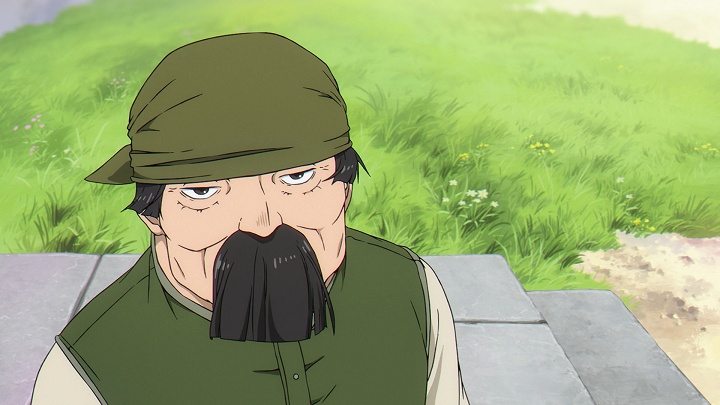
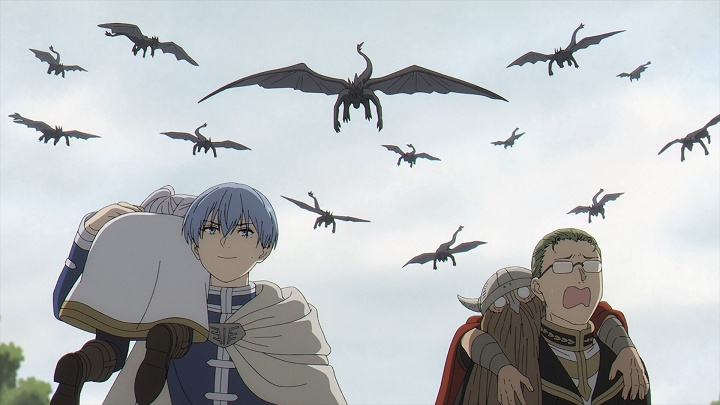
This was a nice pair of episodes to end on, moving away from all the demon combat while maintaining a minor action focus with some “slay a troublesome monster” quests. The loop of Frieren encountering an old acquaintance, doing them a favor, and taking compensation in the form of an obscure grimoire (leading to their constant shortness of funds) has lost some of its luster over the years, so episode 9’s flashback was well-timed, revealing who inspired her to accept such unorthodox payment. It was Himmel, of course, who took whatever people had lying around in exchange for his good deeds, never working without payment so as not to create any debts. I don’t agree with his philosophy (helping others for free seems intrinsically heroic to me), but it’s interesting to see how it’s taken root in Frieren, who naturally slanted it toward the acquisition of magical items. The season-ending episode 10 was pretty good too, but its best scene came after the credits, teasing the Golden Land arc with a look at the strongest remaining demon general Macht, and the human who intends to defeat him: Denken, who we hadn’t seen since the end of season 1. The golden city in question seems far removed from Frieren’s current whereabouts, so perhaps this upcoming arc will proceed without her, at least to begin with. That could be a nice change of pace, but even if she and her party are roped into the story right away, I look forward to their return in late 2027.
Ganglion – 22-24
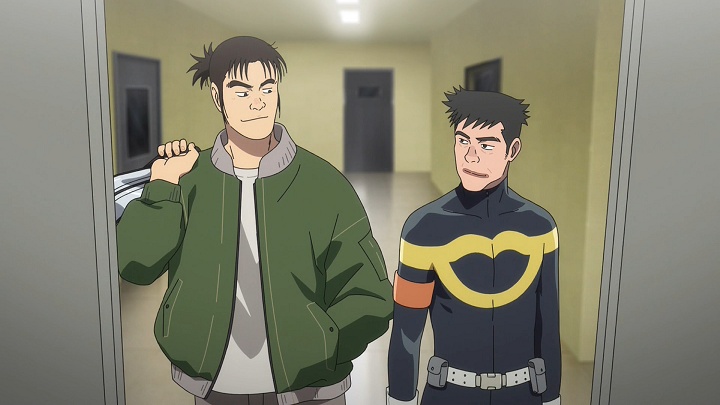
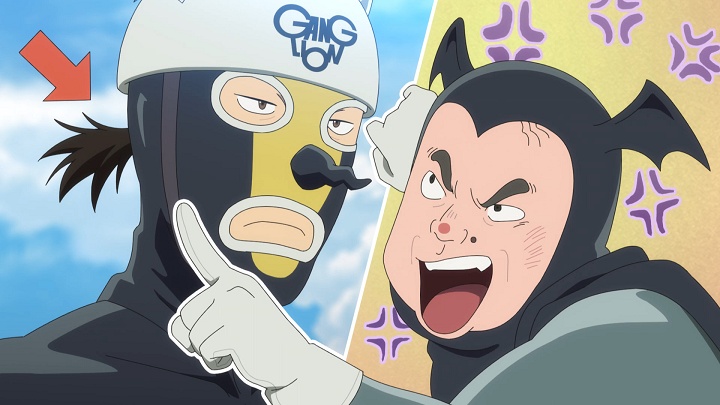
And so Ganglion ends not with Isobe’s resignation, as I speculated in our previous biweekly post, but with that of a new character named Osogabe. Putting the big “I quit” scene in the hands of a new-ish recruit did result in an anticlimactic feeling, but that’s nothing new for this show, with its three minute episodes and indifference toward traditional storytelling. Based on the dialogue scene that bridged episodes 23 and 24, Isobe seemed to be familiar with Osogabe already, though his appearance on Sasuke (better known as Ninja Warrior in the west) was a new piece of info. I really liked that detail, as it’s an indicator of physical prowess that might fascinate an out-of-shape company man nostalgic for his healthier days. Indeed, the fondness in Isobe’s tone as they spoke and the fistbump they shared after Osogabe’s disrespectful resignation created a credible bond between them in no time, so while Ganglion didn’t exactly exit on a conclusive note, these last few episodes were a fine finish to one of the better TV shorts of recent years.
P.S. That final line about adding 300 jobs during a recession makes me want to see more of the company’s mismanagement. The manga ran for two years, so maybe it was a reference to whatever “arc” came next, though I doubt it’ll ever be scanlated.
Ikoku Nikki – 11-13
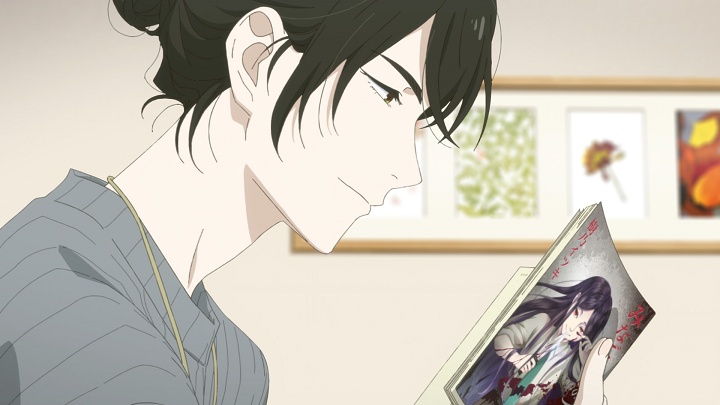
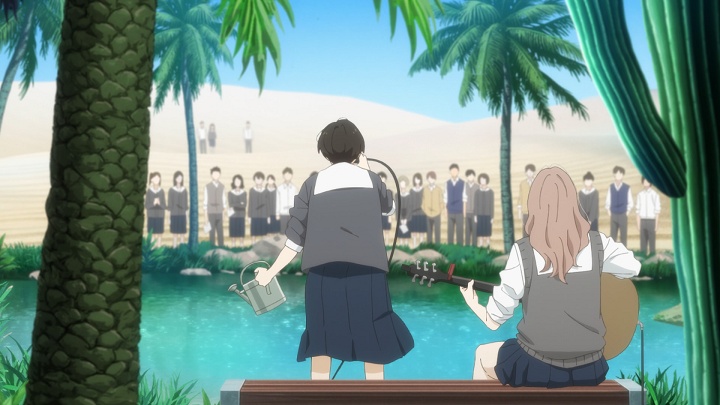
In a previous check-in post, I wondered about the differences between Ikoku Nikki’s source material and anime adaptation, and these episodes only intensified that curiosity. The plot threads about Yoshimura quitting the baseball team, Chiyo’s absence from school, Yuuto’s concern for Chiyo’s well-being, etc. didn’t amount to much, so my uneducated guess is that they were bigger deals in the manga and only made the cut here as a sort of garnish. Even Emiri’s same-sex attraction felt somewhat short-changed, though her greater prominence in the story made it easier to fill in the gaps. I must admit to some dissatisfaction with the flimsiness of these side stories – and not only them, but the conclusion of the series as a whole. Asa’s acceptance of her desire to sing was a long time coming, and its main payoff was a 90 second musical performance that impressed her peers, but didn’t meaningfully contribute to their stories. It was a good memory (as we see from the 10 year flash forward to Asa and Emiri’s catch-up lunch), and it led to the transformation of Asa’s metaphorical desert into a populated oasis, which provided some thematic closure. But I expected more, and would have preferred less pontificating from the adults in the home stretch (I’d jettison that episode 12 discussion about “male-centric rituals” in a heartbeat). Still a great show, though, and I imagine that plenty of folks liked the ending more than I did, so I won’t get too down on it here.
You and I Are Polar Opposites – 10-12
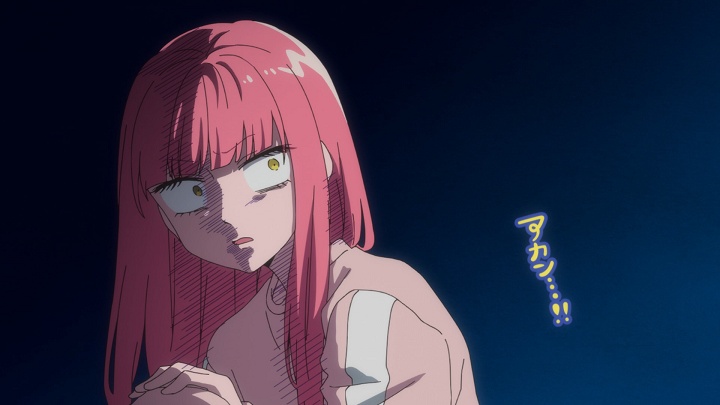
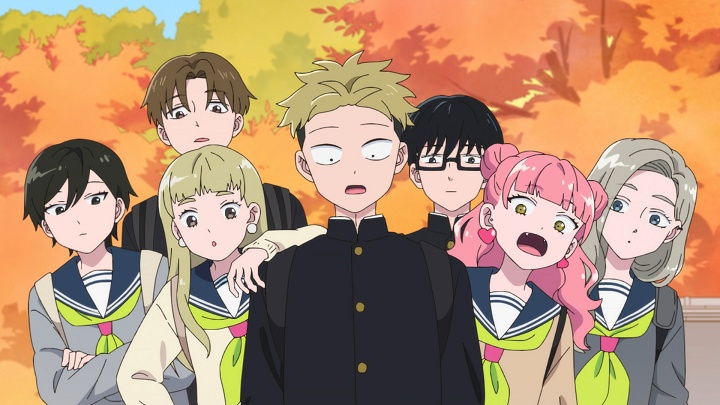
I’m accustomed to high school anime spending more time on culture festivals than class trips, but Polar Opposites took the opposite approach, spending two whole episodes (10 and 11) on its school’s visit to Kyoto – and they were great! One of my favorite aspects of this mini-arc was its presentation, with peppy title cards breaking up the trip’s four days into separate segments, each of which created opportunities for different characters to grab some spotlight. Azuma’s mood saw a noticeable lift (a nice change from her bouts of pessimism in the early episodes), Suzuki and Tani continued working at calling each other by their given names, and new-ish classmates Morimoto and Arami contributed a bit to the joke parade. But the highlight for me was the Yamada/Nishi pairing, which these episodes elevated to the level of the show’s other material. Yamada’s desire to keep their burgeoning relationship private helped set Nishi’s mind at ease, and a gentle acoustic guitar track (an outlier in the show’s largely electronic OST) during their hotel rendezvous signaled the emergence of her deeper feelings. This led into their Chinatown date in episode 12, which was really cute – Nishi’s paralyzing shyness nearly prevented her from showcasing her love of accessories, but Yamada’s enthusiasm upon discovering that side of her was a great demonstration of how suited they are for each other.
P.S. Lots of postscripts this time. I hadn’t known this show was due for a second season, but one is apparently coming this July. I don’t know if I’ll cover the sequel (might want to save column space for new stuff), but I’m expecting good things!

I actually learned recently via an interview with Ikoku Nikki’s scriptwriter that apparently the anime was first produced in 2021, when the series only had seven volumes of manga out, which is why it ended the way it did. I do agree that I would have liked to see the plot threads about Asa and Emiri’s classmates be given more attention than just a passing glance, but I doubt Ikoku Nikki would have gotten more than 13 episodes, so I’m willing to give the producers some leniency as they could only work with what they had.
I do disagree with getting rid of the whole “male centric rituals” speech, because that’s meant to show how conformity, misogyny, and toxic masculinity can negatively affect men as well as women, an example being how Kasamachi felt pressured to engage in objectifying women because all his school friends were doing it.
See this is why so many adaptations suffer. The people in charge of adaptations just can’t be patient. They should have waited until the manga finished before making the series. It ended in 2023. I think that would be plenty of time but they decided to adapt a story that isn’t even finished and spit out a half baked adaptation. This is why I prefer manga.
If a series wants to address the societally damaging behaviors that men engage in, it needs to do more than what Ikoku Nikki did. All we got on that front was a sub-subplot about sexism in the hospital industry’s hiring practices and a one-off conversation (completely divorced from the rest of the show) between a couple of guys having lunch. That level of commentary might satisfy some people, but to me it reads as lip service.
You could write your own stories. At this point no one is bloody satisfied with anything so they take matters into their own hands.